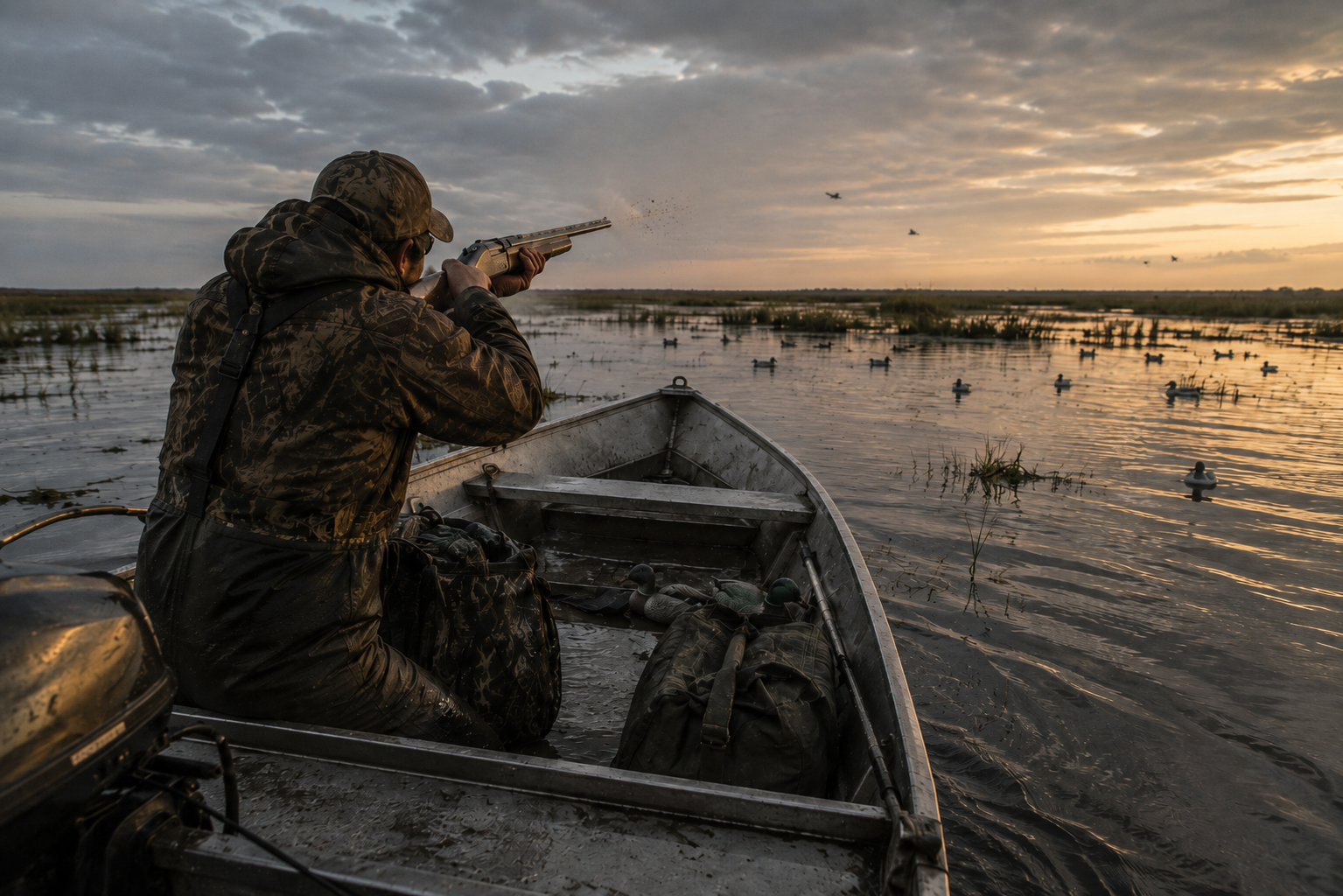
Duck hunting in the sprawling Argentine wetlands frequently requires deploying into the deep marsh via small, flat-bottomed aluminum skiffs. As a thrilling morning component of a broader mixed-bag itinerary, this fast-paced waterfowl action demands specific physical adjustments from the shooter. Firing a shotgun from a floating, dynamic platform introduces variables of balance, recoil, and spatial awareness that are entirely absent when standing on the solid ground of a dove roost or a walked perdiz field.
The Physics of the Skiff
An aluminum mud boat resting on shallow water is highly reactive. Every shift in your body weight, every sudden movement to mount the gun, and the heavy kinetic recoil of every shot fired translates directly into the hull, causing the skiff to pitch and roll. For a hunter accustomed to planting their feet firmly on dry land, this instability can severely disrupt a smooth swing and lead to missed birds.
Tactical Boat Mechanics
Shooting effectively from a skiff requires a conscious adjustment to your physical mechanics and strict adherence to spatial safety rules.
- Establishing the Base: Never stand abruptly to take a shot as a flock approaches. Shooting from a seated position or a low crouch keeps your center of gravity anchored and the boat stable. If the reeds are too high and you must stand, maintain a wide, athletic stance with your knees slightly bent to absorb the boat's lateral movement.
- Defining the Arc of Fire: When two hunters share a skiff, strict firing zones are non-negotiable. Establish an imaginary centerline dividing the decoy spread. You own your side, and your partner owns theirs. Never chase a fast-crossing bird across the centerline, as the shifting weight of two hunters suddenly leaning in the exact same direction can compromise the stability of a small vessel.
- Hull Management: Ejected plastic hulls rolling around on a wet aluminum floor act like ball bearings under muddy boots. Continually sweep empty shells into a designated blind bag or a corner to maintain a secure footing.
The Mixed-Bag Protocol
At elite operations like AWS Lodge, the morning duck session is perfectly calibrated to complement the afternoon's high-volume dove or walked perdiz. Because these duck flights are integrated into a comprehensive multi-species program rather than an exhaustive, standalone waterfowl marathon, conserving your physical energy is paramount. Your guide will aggressively anchor the skiff deep into the reeds or utilize stabilization poles to create the most rigid shooting platform possible, allowing you to focus entirely on the descending flock rather than your balance.
Tactical Field Note: When shooting from a seated position in an aluminum skiff, your natural swing range is severely restricted by your hips. To counteract this, position your body at a 45-degree angle to the primary landing zone in the decoy spread rather than facing it squarely. This pre-loads your torso, allowing for a much wider, smoother swing on crossing targets without having to dangerously shift your lower body.