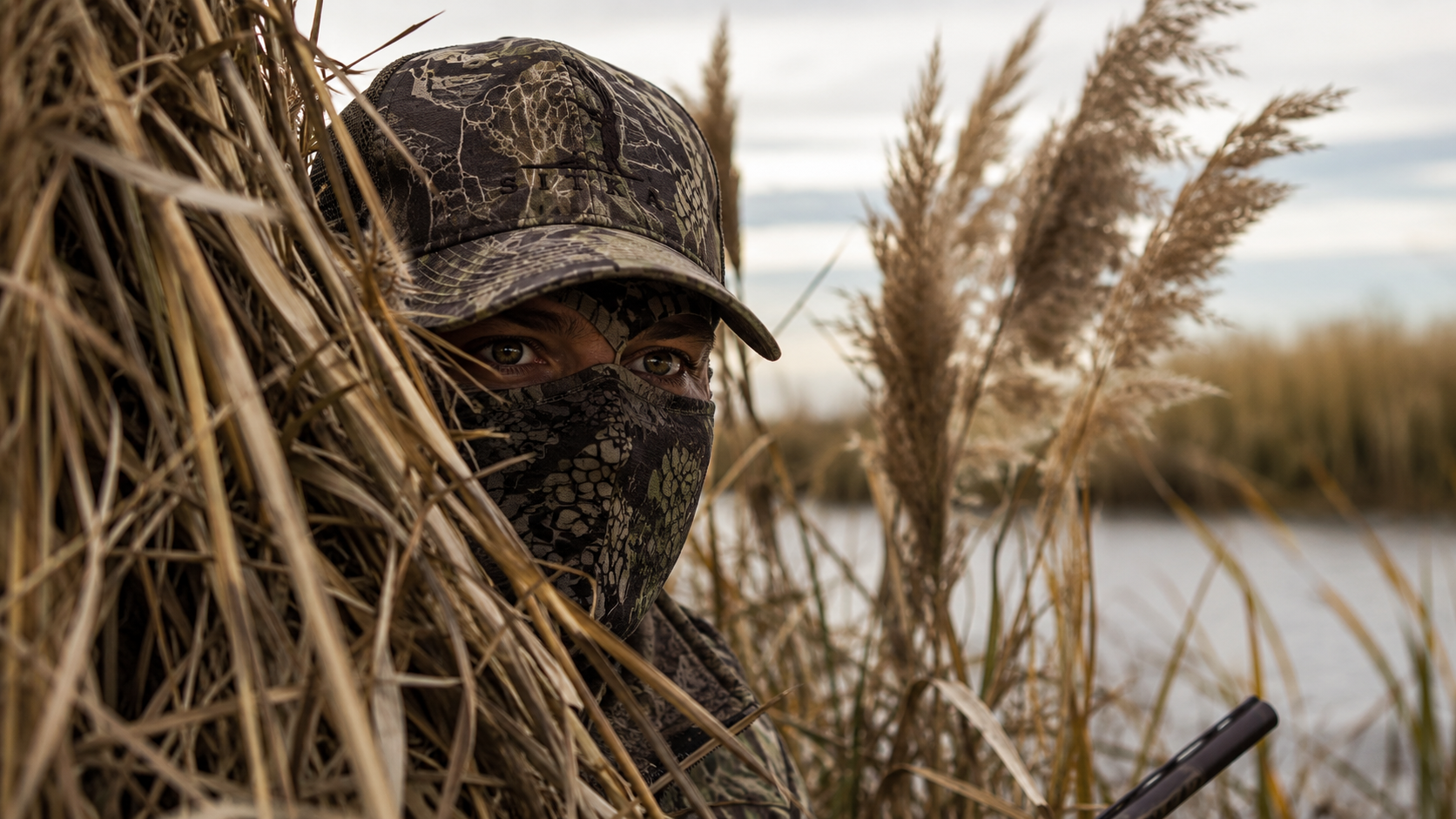
When hunting the pristine wetlands of Argentina, hunters quickly learn that local waterfowl possess incredibly sharp eyesight. In the low-light conditions of an early morning bañado, the glare and movement of a bare human face looking up at the sky act like a beacon, causing wary ducks to flare well out of shotgun range. Effective face concealment is absolutely critical to a successful hunt, but choosing the right method requires balancing stealth with comfort.
The Traditional Route: Camo Face Paint
For decades, face paint has been a staple in the duck blind. The primary advantage of grease or mud-based camo paint is that it provides excellent concealment without covering your mouth or ears. This means zero interference when blowing a duck call and absolutely no risk of fogging up your shooting glasses.
However, the major drawback is the cleanup. High-volume Argentine duck hunts often transition quickly from the muddy marsh back to the refined luxury of the estancia. Spending twenty minutes scrubbing stubborn grease paint off your face before sitting down to a five-star asado is a friction point most executives prefer to avoid.
The Tactical Choice: Mesh Masks and Neck Gaiters
For the modern wingshooter, lightweight mesh masks and camouflage neck gaiters have become the preferred choice in Argentina. They offer instant concealment that can be pulled up or down in seconds. When the hunt is over, you simply take the mask off and you are instantly ready for the ride back to the lodge. They also provide an extra layer of warmth against the biting wind of an Argentine winter morning.
- Breathability is Key: The main issue with solid fabric gaiters is that your warm breath is forced upward, instantly fogging your shooting glasses or safety lenses.
- The Solution: Always choose a highly breathable mesh mask or a gaiter with a dedicated, laser-cut mouth vent. This directs your condensation forward and away from your eyewear.
The Estancia Recommendation
While both methods hide you from the birds, masks offer a far more frictionless experience. Bringing a couple of lightweight, well-ventilated face masks allows you to adapt to changing temperatures in the blind while keeping your face completely clean for the post-hunt celebrations.
Tactical Field Note: If you wear prescription glasses or safety lenses in the blind, avoid heavy fleece neck gaiters pulled over your nose. The resulting fog will render you completely blind just as the ducks commit to the decoys. Invest in a dedicated, structured waterfowl mask with an open mouth port, and always keep your face angled down under the brim of your hat until the guide calls the shot.