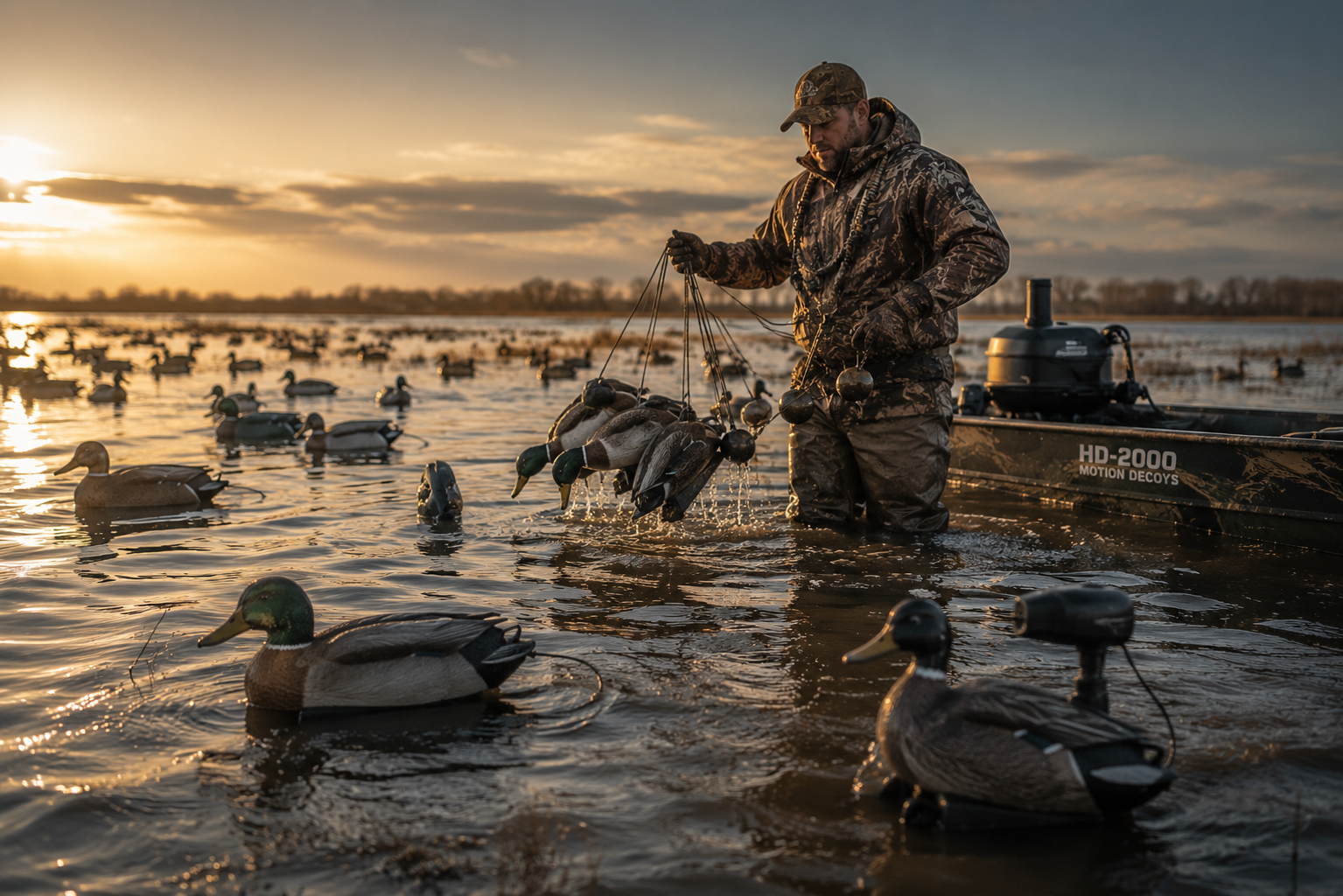
When the fierce pampas winds die down completely, the surface of an Argentine bañado (flooded pasture) turns to glass, forcing expert guides to deploy mechanical water-motion decoys and traditional jerk strings to prevent the spread from looking like lifeless plastic.
The Dead Water Dilemma
Ducks possess incredibly sharp vision designed to detect the microscopic ripples and splashes created by feeding waterfowl. On a windy day, the chop on the water naturally rolls the floating decoys, mimicking a live flock. On a dead-calm morning, a spread of 50 decoys sits perfectly motionless, casting unnatural, rigid reflections on the mirrored surface of the water. Incoming flocks of Yellow-billed Pintails will spot this anomaly from high altitude and flare instantly. Spinning-wing decoys (Mojos) provide flash, but they do not create the critical water ripples needed to sell the illusion to late-season, highly educated birds.
Motion StrategyExecution MethodTactical ResultSpinning-Wing (Mojo)Motorized, elevated pole.Long-range visual flash; does not move water.Splashing PulsatorsBattery-powered water pump.Creates continuous, heavy ripples in the center of the spread.The Jerk StringManual pull-cord attached to 3-4 decoys.The Elite Standard. Creates erratic, natural movement on command.
Deploying the Jerk String
The most effective and fail-proof tool in the Argentine duck guide's arsenal is the classic jerk string. A small anchor is dropped 30 yards out in the landing pocket. A bungee cord attaches the anchor to a heavy paracord line that runs directly back into the hunter's blind. Three or four floating decoys are clipped to this line. When a flock approaches, the guide (or the hunter) gives the paracord sharp, erratic tugs. This causes the decoys to dive forward against the bungee and snap back, sending massive, natural ripples throughout the entire spread. At premium operations like AWS Lodge, guides use this manual technique specifically because it relies on human timing, allowing them to stop the motion the exact second the ducks commit to the final glide.
Tactical Field Note: If your guide hands you the jerk string handle, you must watch their cues. Pull the string aggressively when the ducks are at a distance or circling behind you to grab their attention. Once the ducks lock their wings and turn their heads directly toward the landing pocket, stop pulling immediately. Moving the string while they are looking directly at it will expose the trick and flare the flock.
Internal Connections
- See the rest of the decoy spread in Decoy Geometry: The J-Hook vs U-Spread in Argentina.
- Understand the motorized decoys via Mojo Decoys: Deploying Spinning Wings in the Argentine Marsh.
- Read about how the wind affects this in Wind Direction and Duck Decoying in Argentina.