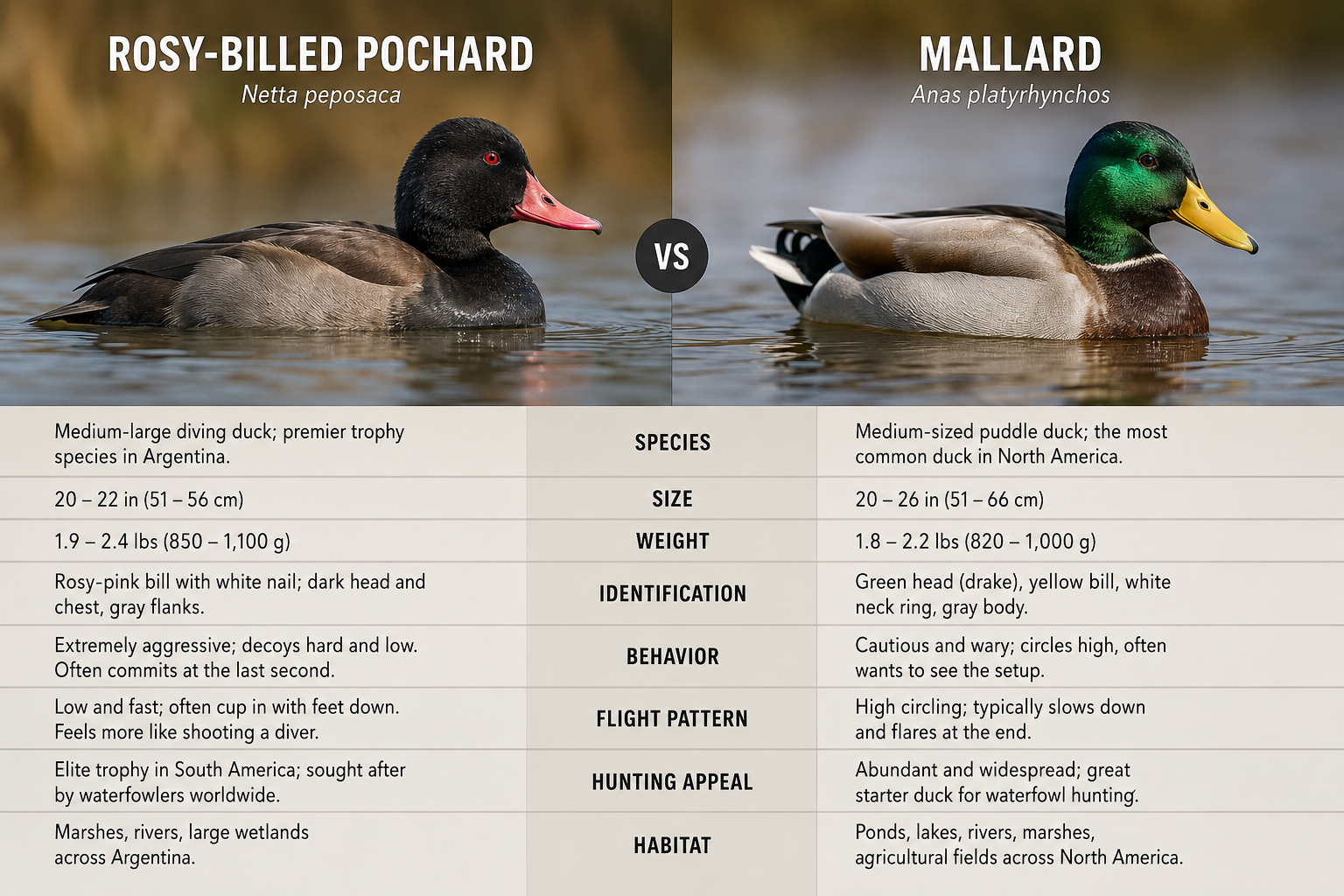
Comparing the Argentine Rosy-billed Pochard to the North American Mallard contrasts the aggressive, low-altitude, diver-like behavior of South America's premier trophy against the cautious, high-circling puddle duck mechanics of the United States.
The King of the Pampas vs The Greenhead
For the U.S. waterfowler, the Mallard is the absolute baseline for decoying. Mallards are highly vocal, often circle a spread multiple times from high altitudes, and demand flawless calling and perfect concealment. The Rosy-billed Pochard (Netta peposaca) operates on a completely different behavioral matrix. While technically a diving duck, it feeds heavily in the shallow flooded pastures of Buenos Aires. It is an incredibly aggressive bird. They travel in massive, tight flocks and rarely circle. When they commit to a decoy spread, they drop their altitude miles out, flying just feet above the marsh grass, and crash directly into the landing pocket with minimal hesitation.
Waterfowl CharacteristicNorth American MallardArgentine Rosy-Billed PochardDecoying BehaviorCautious; circles from high altitudes; highly call-responsive.Aggressive; low-altitude, direct approaches; visually driven.Physical BuildMedium-large puddle duck; relatively light plumage.Massive, heavy-bodied; dense, thick winter diver plumage.Visual IdentificationGreen head, yellow bill, white neck ring (Drake).Jet black chest, grey flanks, bulbous bright crimson bill (Drake).Shotgun Choke / PayloadImproved Cylinder / Steel #2 or #3.Light Modified / Steel #3 or #4.
Tactical Adjustments in the Blind
Because the Rosy-billed Pochard approaches from such a low angle, blind discipline is significantly different. You do not need to hide your face from high-flying birds directly overhead; you must hide your silhouette from birds approaching at eye level. Furthermore, because they are built to survive the freezing waters of Patagonia, they are heavily armored with dense breast feathers. You cannot 'scratch' a Pochard down with a light hit. You must center the bird in the pattern using high-velocity non-toxic steel to ensure a clean, ethical harvest before the bird dives into the reeds.
Tactical Field Note: Do not hail-call a flock of Pochards as you would a high-flying flock of Mallards. The Rosy-bill communicates with low, guttural purrs and grunts rather than loud quacks. Rely on the sheer visual size of your outfitter's decoy spread to do the heavy lifting.
Internal Connections
- Read the master species profile in Hunting the Rosy-Billed Pochard in Argentina.
- Understand the legal loads in Non-Toxic Shot Regulations for Argentina Waterfowl Hunting.
- Compare this to the fast-flying teal in Hunting the Speckled Teal in Argentina.