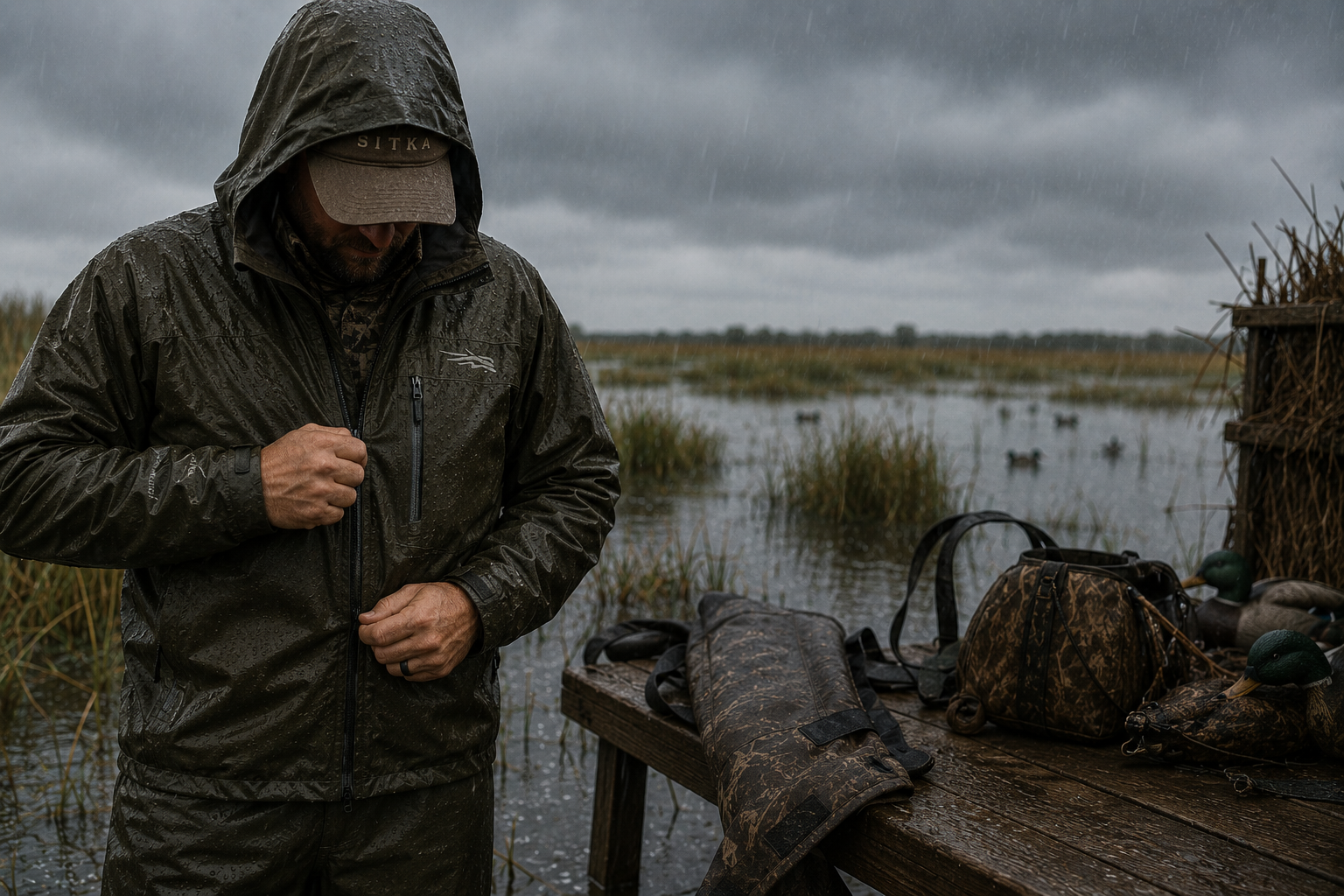
Waterfowl hunting is inherently tied to inclement weather. The most active flight patterns in the Argentine wetlands often coincide with low-pressure systems, driving rain, and biting winds. Staying dry in the blind is not just a matter of comfort; it is a critical safety factor to prevent hypothermia. However, selecting the right rain gear requires navigating the constant trade-off between absolute waterproofing and essential breathability.
The Mixed-Bag Reality
Unlike specialized, standalone waterfowl camps in other parts of the world, an elite Argentine duck marsh deployment is typically the opening phase of a comprehensive mixed-bag itinerary. A hunter will often transition from a rain-soaked morning bañado directly into a high-volume dove roost or a walked perdiz field by the afternoon. This dynamic schedule demands a versatile rain system that manages both the driving rain of dawn and the rising body heat of an active shooting day.
The Trap of Absolute Waterproofing
Entry-level rain jackets are often constructed from PVC or heavy, rubberized materials. While these garments are completely waterproof and provide an impenetrable shield against the rain, they offer zero breathability.
- The Greenhouse Effect: Getting into a blind requires physical exertion—wading through mud, arranging decoys, and carrying heavy blind bags. Inside a non-breathable jacket, the sweat generated from this exertion becomes trapped. Within an hour, the hunter is completely soaked from the inside out, rendering the jacket counterproductive.
- Restrictive Movement: Heavy rubberized coats are notoriously stiff, severely restricting the fluid shoulder rotation and quick gun mounts required to track fast-crossing Teal or Pintails.
The Breathable Membrane Advantage
The industry standard for high-performance wingshooting gear is the breathable waterproof membrane, such as Gore-Tex or similar proprietary fabrics. These microscopic membranes feature pores that are small enough to block liquid water droplets from the outside, yet large enough to allow vaporized sweat to escape from the inside.
- Active Moisture Management: A breathable shell ensures that as your core temperature rises during physical exertion or the fast-paced action of a passing flock, the excess moisture is vented into the atmosphere.
- The Layering Protocol: A thin, uninsulated breathable shell is the ultimate exterior layer. It allows the hunter to wear moisture-wicking base layers and merino wool mid-layers beneath it, easily adding or shedding insulation as the unpredictable pampas weather shifts throughout the day.
The Estancia Standard
At premium properties, concierges advise guests to invest strictly in premium, breathable shells featuring taped seams and waterproof zippers. When packing for a multi-species expedition, space is at a premium, and a single, high-quality, lightweight shell is vastly superior to a heavy, insulated raincoat that becomes a liability the moment the sun breaks through the clouds.
Tactical Field Note: When purchasing a breathable rain shell for waterfowl hunting, pay strict attention to the wrist cuffs. Ensure the jacket features adjustable, tight-sealing neoprene inner cuffs. When you raise your shotgun at a steep vertical angle to fire at overhead ducks, standard loose cuffs will funnel freezing rain directly down your forearms and into your core layers, instantly compromising your thermal protection.