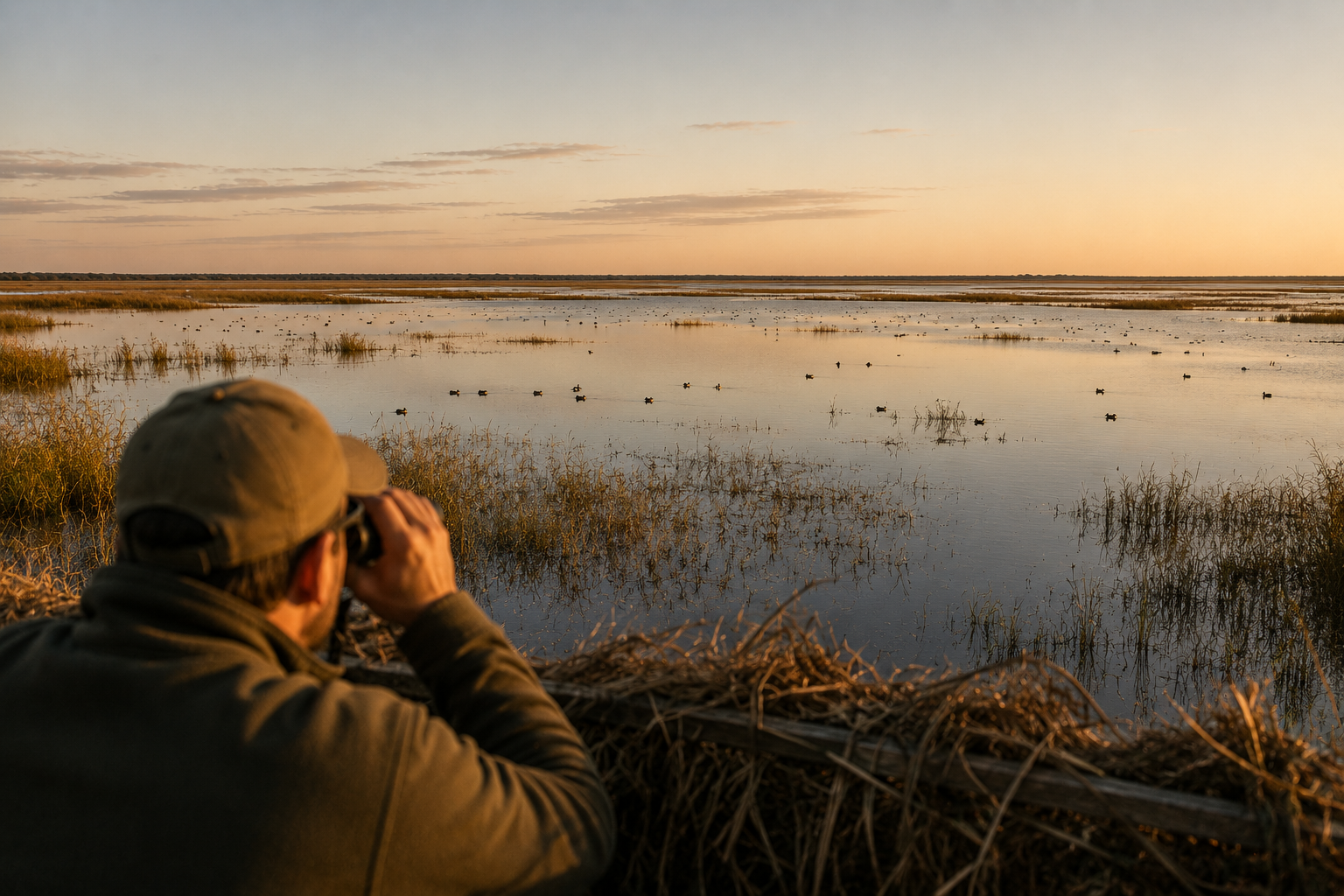
For the traveling wingshooter, the wetlands of Argentina offer a waterfowl experience unmatched anywhere else on the globe. However, the sheer volume of birds is only half the equation. Success in the blind requires an intimate understanding of the terrain. The Argentine marsh is generally divided into two distinct aquatic environments: the "bañado" and the "laguna." Knowing how to read and hunt these different waters is what separates a world-class outfitter from a standard hunting camp.
The Bañado: The Flooded Pasture
A bañado is a shallow, often seasonal wetland formed by flooded agricultural pastures or low-lying grassy plains. These are highly dynamic environments, expanding and contracting based on recent rainfall and river fluctuations.
- The Habitat: Bañados are rich in submerged vegetation, seeds, and insects, making them the ultimate feeding ground for dabbling species like the prized Rosy-billed Pochard, Yellow-billed Pintail, and various Teal.
- The Tactical Approach: Because the water is shallow, hunters are often deployed in small, flat-bottomed aluminum skiffs hidden in tall reeds, or they may stand directly in the water wearing chest waders.
- The Hazards: Hunting a bañado requires caution. Because these are flooded agricultural fields, they frequently conceal submerged barbed-wire fences and uneven cattle ruts, making careful wading and durable wader repair kits absolutely essential.
The Laguna: Open Water Lakes
In contrast, a laguna is a permanent, deeper body of open water. While they may have reedy edges, their centers are wide, wind-swept expanses.
- The Habitat: Lagunas serve as massive roosting and resting areas. You will often see thousands of ducks rafted up in the middle of a laguna during the midday hours, taking refuge from predators and resting between feeding cycles.
- The Tactical Approach: Hunting a laguna requires a completely different strategy. The decoys must be highly visible from long distances. Guides will deploy massive "V" or "J" hook spreads to pull high-flying flocks down into the landing zone. Blinds are typically built on the solid shorelines or utilize specialized, heavily camouflaged boat blinds anchored on the edges.
- Wind Dynamics: On a laguna, wind is the ultimate dictator. A strong breeze will create chop on the water, giving your decoys lifelike movement, but it also means the birds will strictly approach the landing zone facing directly into the wind, requiring precise blind placement.
The Estancia Advantage
The ultimate luxury in Argentine waterfowl hunting is having a logistics team that understands these fluid dynamics. Elite operations rely on full-time scouts who monitor both the bañados and the lagunas daily. Depending on the weather front, the wind direction, and the previous night's rainfall, your guide will calculate exactly which environment offers the highest tactical advantage for your morning deployment.
Tactical Field Note: When your guide sets you up in a bañado, pay close attention to the small pockets of open water among the thick vegetation. Dabbling ducks will aim precisely for these clear landing zones. Do not shoot at the birds while they are circling high; keep your face concealed under the brim of your hat and wait until they commit their wings and drop their landing gear directly into the open pocket before mounting your shotgun.