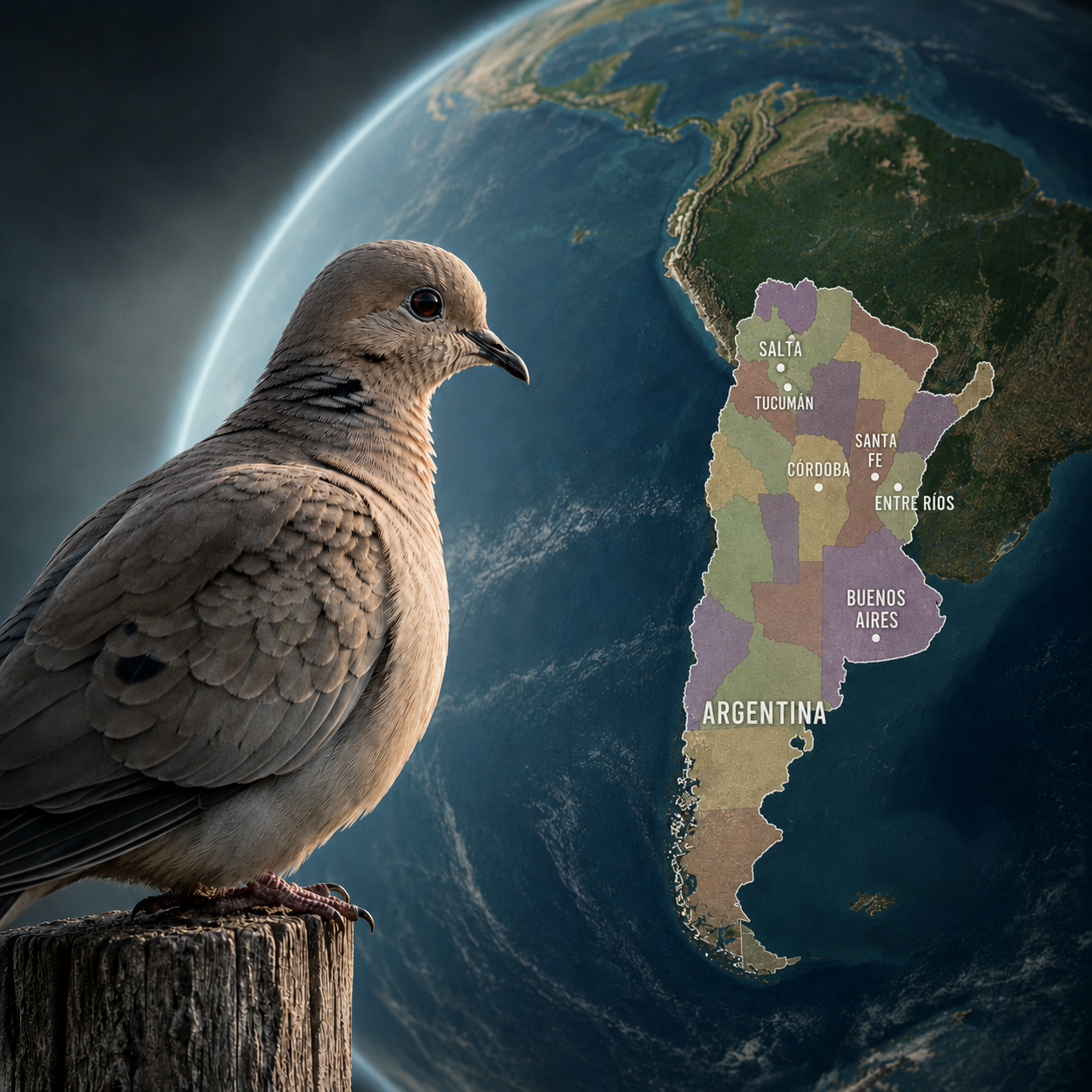
The staggering, almost incomprehensible volume of the Argentine dove population is not a biological accident; it is the direct result of a perfect ecological storm, merging the impenetrable security of the native scrub forest with the infinite calories of modern commercial agriculture.
The Fortress of the Chaco Scrub
In regions like Córdoba and Santiago del Estero, the landscape is divided into two distinct zones: commercial farming plains and the *Espinal* or *Gran Chaco* scrub forest. This forest is the actual "roost." It is an incredibly dense, hostile environment comprised of low, violently thorny native trees like the *Tala* and the *Espinillo*. This thorny canopy acts as an impenetrable fortress for the Eared Dove (*Zenaida auriculata*). Aerial predators like hawks cannot dive through the dense thorns, and terrestrial predators like foxes cannot navigate the thick brush. The doves breed, sleep, and nest inside this protected sanctuary in numbers exceeding 50 million birds in a single centralized location.
Ecological ComponentFunction in the Dove EcosystemImpact on the HunterThe Roost (Thorny Scrub)Absolute protection from predators; primary nesting ground.Hunters shoot the "edges" as birds funnel in and out of the trees.The Feedlot (Agriculture)Infinite caloric energy (Corn, Sorghum, Soybeans).Hunters shoot the open fields as birds swarm the harvest.The Water SourceHydration and digestion of hard grains.Hunters intercept flocks flying low over streams and stock tanks.
The Caloric Superhighway
If the roost provides security, the surrounding agricultural plains provide infinite energy. The Eared Dove is essentially an agricultural pest that has perfectly adapted to the expansion of commercial farming. Every morning, millions of doves exit the thorny roost and fly directly to massive, freshly harvested fields of corn, sorghum, and sunflowers. Because the food source never depletes and the climate remains relatively temperate year-round, the eared dove does not migrate. They stay localized. Furthermore, this infinite food supply allows the doves to breed up to five times a year. Elite outfitters position their international clients directly on the invisible "superhighways" that bridge the secure roost and the caloric feedlot, guaranteeing 2,000-round days without ever denting the overall biological population.
Tactical Field Note: Because the birds use specific gaps in the trees to exit the roost efficiently, shooting on the edge of the scrub forest is highly concentrated. However, the background is dark green and the birds appear suddenly over the canopy. Wear light-enhancing (yellow or vermillion) shooting glasses to track the grey birds instantly as they break the tree line.
Internal Connections
- Read about shooting this specific boundary in Hunting the Scrub Forest: Edge Tactics for Doves.
- Understand how the birds are tracked via How Outfitters Scout Dove Roosts in Argentina.
- See why the population is so massive in Eared Dove Biology: Why Argentina Has Millions of Birds.