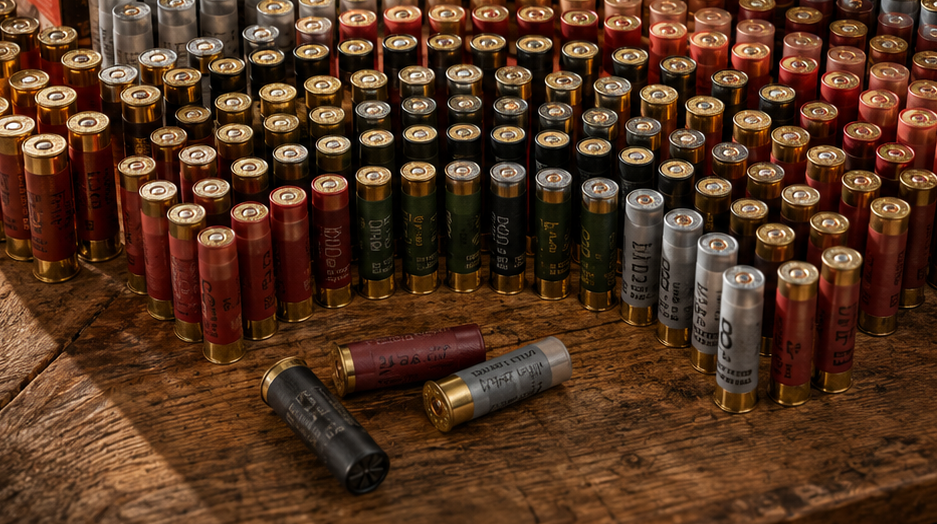
Shot Size Guide: The Ballistics of the Argentina Dove Roost
For high-volume dove hunting in Argentina, shot size is not a minor detail. It affects pattern density, effective range, recoil, safety, and the hunter’s ability to stay sharp through hundreds or even thousands of rounds in a single day.
The most common and effective shot sizes for Argentine dove hunting are #7.5 and #8. These loads provide the right balance between pellet count, pattern coverage, and enough downrange energy to cleanly take fast-moving doves at normal shooting distances.
Why #7.5 and #8 Work So Well
Argentina’s dove shooting is usually built around continuous, fast-paced flight lines. Birds may come from multiple angles, sometimes crossing hard, climbing, dropping, or passing over the shooter at speed. In this type of hunting, pattern density is critical.
A #8 shell carries a higher pellet count, which helps create a dense, forgiving pattern. This is especially useful for close to moderate-range shooting, where fast target acquisition and consistent coverage matter more than raw pellet energy.
A #7.5 shell carries slightly larger pellets, giving a bit more energy and reach while still maintaining excellent pattern density. For many hunters, #7.5 is the best all-around choice because it performs well on both close incoming birds and longer crossing shots.
In practical terms:
#8 shot is excellent for close, fast, high-volume shooting.
#7.5 shot is a balanced choice for mixed angles and slightly longer shots.
Both are far better suited to Argentina dove shooting than heavier field loads.
Why Not Use #6 Shot?
Some hunters arriving from North America may assume that heavier shot means better performance. For Argentine dove shooting, this is usually the wrong approach.
A #6 pellet is larger, heavier, and carries more energy much farther downrange. While that may sound useful, it creates two serious problems in a high-volume dove field.
First, #6 shot reduces pellet count. Fewer pellets mean a thinner pattern, which can actually make it harder to consistently hit small, fast birds.
Second, and more importantly, #6 shot creates a major safety concern. In Argentina, dove fields often involve multiple shooting positions, assistants, field staff, and sometimes nearby agricultural activity. Heavier pellets travel farther and retain more dangerous energy during pellet fallout. This makes #6 an inappropriate choice for most high-volume dove situations.
For this reason, experienced outfitters strongly prefer #7.5 or #8 shot. These sizes provide effective performance while keeping the shooting environment safer and more controlled.
Recoil Matters in Argentina
Argentina dove hunting is not like a short morning hunt at home. A shooter may fire hundreds of shells in one session, and some high-volume days can involve extremely heavy round counts.
That makes recoil management essential.
Lighter target-style loads in #7.5 or #8 help reduce felt recoil, which protects the shoulder, neck, cheek, and concentration of the shooter. Less recoil means better endurance, smoother gun mount, faster second shots, and fewer bad habits as the day goes on.
Heavy loads may feel manageable for the first box or two, but after several hundred rounds they can quickly create fatigue. Once fatigue sets in, shooting quality drops. The hunter starts lifting the head, rushing the shot, flinching, or slowing down.
In Argentina, the best shell is not the one that feels powerful. It is the one that lets the hunter shoot well all day.
Recommended Setup
For most Argentina dove hunts, the ideal setup is:
Shot size: #7.5 or #8
Load type: light target or dove load
Gauge: 20 gauge or 12 gauge depending on hunter preference
Priority: dense pattern, low recoil, safe pellet fall, and all-day consistency
For high-volume roost or flight-line shooting, #8 is excellent when birds are working closer. For more open fields, crossing birds, or mixed distances, #7.5 is often the preferred all-around choice.
Final Takeaway
The best shot size for Argentina dove hunting is not about maximum power. It is about efficiency.
#7.5 and #8 shot deliver the ideal combination of pattern density, clean performance, manageable recoil, and field safety. Heavier shot such as #6 is not recommended because it carries too far, increases safety risk, and provides less pattern coverage for fast, small targets.
Smart shell selection makes the hunt safer, more comfortable, and more productive—especially when the shooting volume is measured not in boxes, but in cases.