Whether you need to pack chest waders for duck hunting in Argentina depends entirely on your specific hunting region: full-service 5mm neoprene or insulated breathable waders are absolutely mandatory for the deep river islands of Santa Fe, but hunters in the shallow agricultural ponds of Buenos Aires can often hunt comfortably in standard knee boots or hip waders.
Matching Gear to the Geography
The Argentine waterfowl habitat is split between two distinct ecosystems. In the Paraná River Delta (Santa Fe and Corrientes), hunters must navigate tidal shifts, deep mud sloughs, and boat-to-blind transfers in waist-deep water. Chest waders are your primary lifeline against hypothermia in these environments. Conversely, the Humid Pampa (Buenos Aires Province) features shallow, hard-bottomed flooded pastures where guides can often drive a truck directly to the dry edge of the blind, rendering bulky chest waders unnecessary and uncomfortable.
| Hunting Region | Water Environment | Footwear Requirement |
|---|---|---|
| Santa Fe / Paraná Delta | Deep sloughs, river mud, boat transfers. | Mandatory: Insulated Chest Waders |
| Buenos Aires Province | Shallow flooded agricultural pastures. | Optimal: Knee Boots or Hip Waders |
| Entre Ríos | Mixed marsh margins and lagoons. | Highly Recommended: Breathable Chest Waders |
The Rental Reality
Packing wet, muddy waders into international luggage is a major logistical friction point. To counter this, experienced duck lodges have begun maintaining extensive fleets of full-service rental waders (brands like Sitka or Simms) for their clients. If you are flying into a lodge that requires chest waders, always ask the outfitter for a sizing chart months in advance to reserve a rental pair and save 15 pounds of checked baggage weight.
The 3-Layer System for Argentina Winter Duck Hunting
Surviving the brutal, humid cold of the Argentine winter duck marsh requires hunters to completely abandon thick, restrictive arctic coats in favor of a highly modular, 3-layer tactical clothing system designed to manage rapid temperature swings.
The Flaw of the Single Heavy Coat
A common mistake made by first-time hunters traveling to provinces like Buenos Aires or Santa Fe in July is packing a single, large insulated parka. The Argentine winter is characterized by extreme diurnal temperature shifts. At 5:00 AM, during the mud boat ride, the ambient temperature may be 30°F (-1°C) with a piercing, humid wind chill. By 10:30 AM, the bright South American sun clears the horizon, rapidly pushing the temperature to 60°F (15°C). If you are wearing a non-removable arctic coat beneath your chest waders, you will begin to sweat profusely. When you stop moving, that trapped sweat cools against your skin, plunging your core temperature and inducing hypothermia.
| Layer Element | Material Specification | Tactical Purpose in the Blind |
|---|---|---|
| 1. The Base Layer | High-Quality Merino Wool (Top and Bottom). | Wicks sweat away from the skin; retains heat even if slightly damp. |
| 2. The Mid-Layer | High-loft Fleece pullover or packable Down vest. | Traps body heat; easily removable once the sun warms the marsh. |
| 3. The Outer Shell | Uninsulated Gore-Tex (or similar) waterproof parka. | Acts as an impenetrable shield against wind, freezing rain, and boat spray. |
Managing Extremities in the Delta
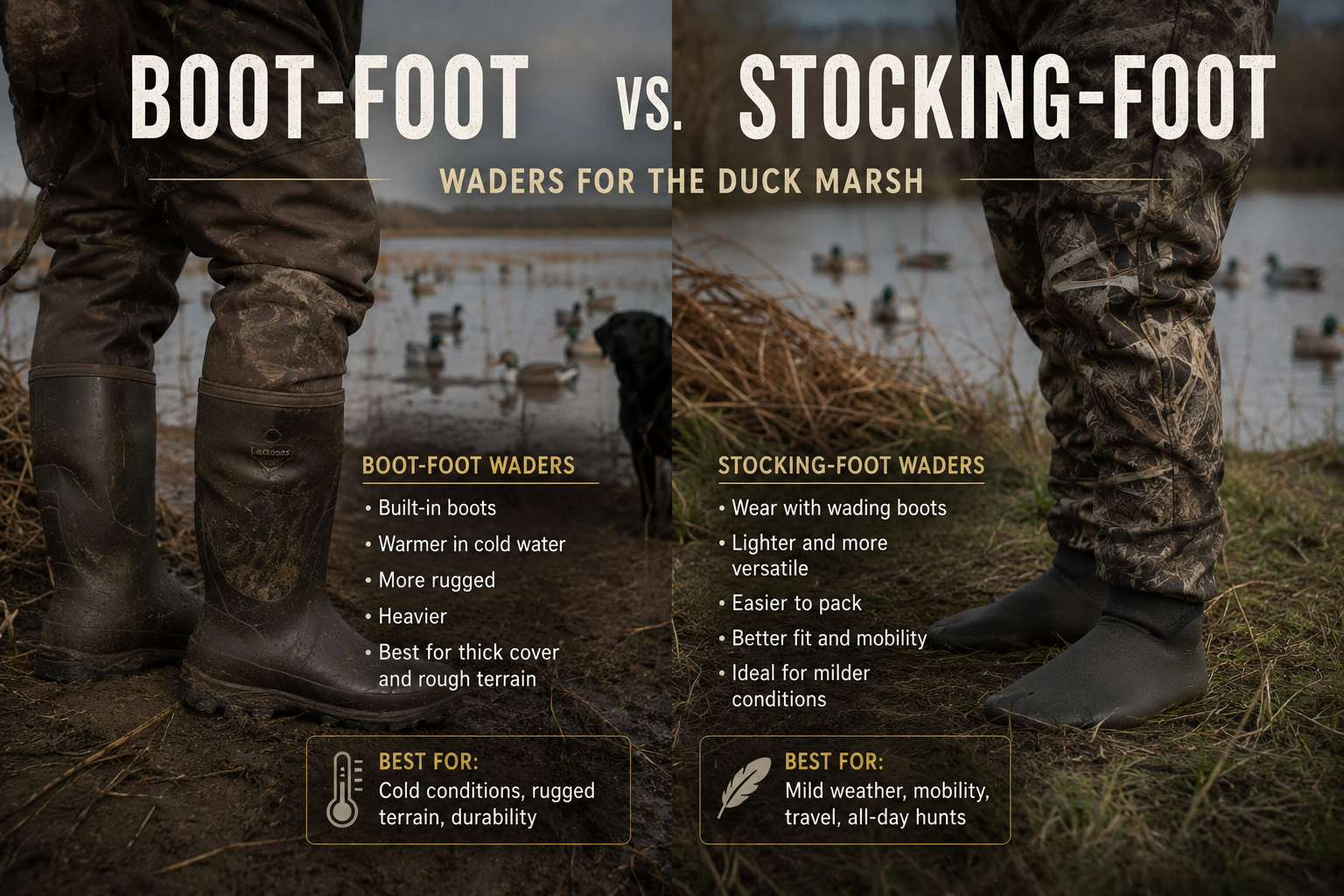
Boot-Foot vs Stocking-Foot Waders for the Duck Marsh
Navigating the incredibly adhesive, boot-sucking mud of the Argentine duck marsh requires international waterfowlers to make a critical footwear decision, pitting the convenience of traditional boot-foot waders against the lightweight mobility of the stocking-foot system.
The Threat of the 'Barro'
The mud (barro) in the Paraná Delta and the flooded pastures of Buenos Aires is notoriously thick and viscous. When you step into the marsh to walk to your sunken blind, the mud creates a large suction vacuum around your foot. If your footwear is not perfectly secured, pulling your leg upward will rip your foot entirely out of your boot, leaving you standing in freezing water in just your socks. This environmental reality dictates how you armor your lower half against the 30°F (-1°C) winter water.
Wader TypeDesign StructurePerformance in Argentine MudBoot-Foot WadersRubber boot permanently fused to the wader leg.Excellent. Cannot be pulled off by the mud; bulky to pack.Stocking-Foot WadersNeoprene sock; requires a separate lace-up wading boot.High Risk. If boots are not laced incredibly tight, the mud will pull them off.
The Logistical Compromise
From a purely tactical field perspective, Boot-Foot waders are the supreme choice for Argentina. Because the heavy rubber boot is vulcanized directly to the Gore-Tex or Neoprene leg, the mud cannot steal your shoe. You simply stomp through the swamp with absolute confidence. However, boot-foot waders are large, heavy, and incredibly difficult to pack into a checked airline duffel bag. Stocking-Foot waders (used widely by fly fishermen) pack down incredibly small. If you choose stocking-foot waders to save luggage weight, you must bring dedicated, heavy-duty wading boots and lace them with brutal tightness. Furthermore, you must fold down the integrated gravel guards to prevent the abrasive mud and silt from working its way between the boot and the neoprene sock, which will quickly rub holes in the waterproof material.
Duck Blind Heating: Managing Cold in the Winter Marsh
A severe shock for North American waterfowlers accustomed to luxurious, permanent goose pits is the complete absence of propane heating infrastructure in the Argentine duck marsh, forcing hunters to rely entirely on their apparel systems and chemical thermogenics to survive the freezing pre-dawn temperatures.
The Mobility Mandate
In the United States, commercial duck operations often utilize large, sunken steel pits equipped with commercial propane heaters, allowing hunters to shoot in thin hoodies during a blizzard. In Argentina, the hunting environment is fiercely dynamic. Waterfowl migrations shift daily based on the large Paraná River tides, agricultural flooding, and local hunting pressure. To ensure hunters are always underneath the primary flight lines, experienced outfitters must remain highly mobile. The blinds used—whether sunken plastic buckets or floating aluminum skiffs woven into the reeds—are temporary structures built daily. There is simply no logistical way to transport, secure, and operate heavy propane tanks and open-flame heaters in these fast-erecting, deep-water hides.
| Heating Element | North American Reality | Argentine Reality |
|---|---|---|
| Propane Tank Heaters | Common in permanent, leased blinds. | Non-existent. Too heavy and dangerous for mobile mud boats. |
| Chemical Hand Warmers | Used as a backup. | Mandatory. The primary source of localized heat in the blind. |
| Internal Body Heat | Often ignored due to blind heaters. | Critical. Must be trapped by full-service Gore-Tex and Merino wool. |
The Chemical and Caloric Defense
Torn Waders: Surviving Submerged Barbed Wire in the Pampas
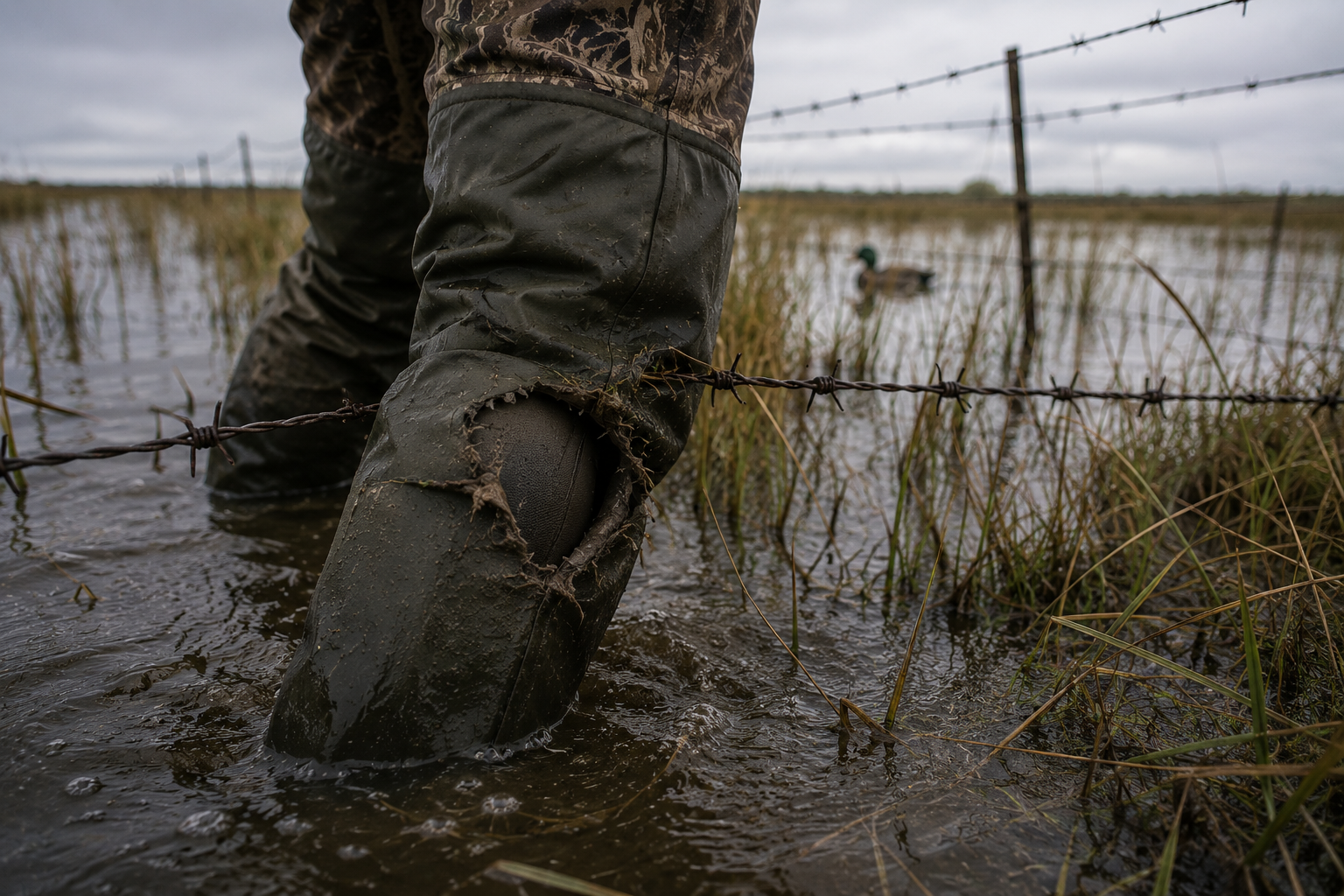
The Argentine bañado is one of the most productive waterfowl habitats on earth, but it is also an inherently agricultural environment. Because these shallow wetlands are formed by seasonal flooding over cattle pastures, they conceal a myriad of submerged hazards. The most notorious of these is rusted, submerged barbed wire. A sudden snag and a tear in a pair of full-service breathable waders will instantly flood cold water against your core, transforming an exhilarating morning flight into a grueling endurance test.
The Multi-Species Impact
In the context of a high-performance, mixed-bag program, an equipment failure in the morning marsh has cascading effects. A hunter who becomes soaked and chilled while chasing Rosy-billed Pochards will be physically drained by the time they transition to the high-volume dove roost or walked perdiz fields in the afternoon. Maintaining a dry microclimate inside your waders is critical to sustaining the energy required for a comprehensive, multi-species daily itinerary.
Immediate Field Triage
When a puncture occurs, continuing to wade deeper is a tactical error. You must immediately retreat to the shallow edges of the blind or the mud boat to assess the damage before your insulating mid-layers become completely saturated.
- The UV Cure Solution: The modern traveling wingshooter must carry a small tube of UV-cured wader repair resin in their blind bag. Unlike traditional adhesives that require overnight curing, UV resin can be applied directly to a wet tear and cured rock-hard in less than a minute using direct sunlight or a small UV flashlight.
- Emergency Tape: For large, jagged tears that resin alone cannot seal, high-grade waterproof repair tape is the secondary line of defense. Pressing a patch over the tear and sealing the edges with UV resin will keep you in the fight until the morning flight concludes.
The Estancia Standard
Related AWSORG Field Intelligence
- Duck Hunting in Argentina: Complete Guide
- Argentina Duck Hunting Regions: Buenos Aires, Entre Ríos and the Paraná
- What to Pack for Duck Hunting in Argentina
- Argentina Duck Hunting Season & Weather