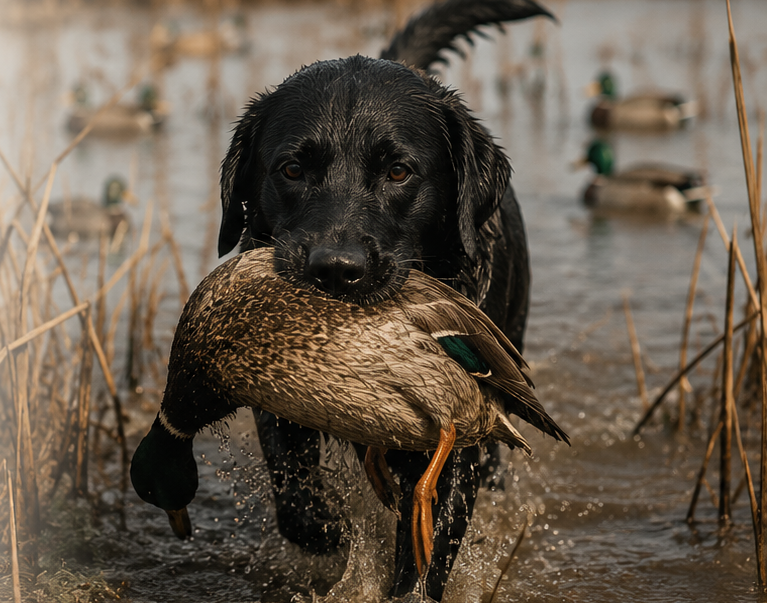
While pointing dogs dominate the upland pampas, experienced waterfowl outfitters in Argentina rely heavily on established Labrador Retrievers to execute fast, efficient recoveries of downed Rosy-billed Pochards and Teal in the freezing, deep-water sloughs of the Paraná River Delta.
The Necessity of the Marsh Retriever
In the shallow flooded pastures of Buenos Aires, a guide can easily wade out to collect downed ducks between flights. In the deep river systems of Santa Fe or Corrientes, wading is often impossible. The water is deep, the currents are strong, and the mud is treacherous. Furthermore, a crippled diving duck (like a Pochard) will immediately submerge and swim hundreds of yards into dense reed beds. Without a highly trained retriever, these birds are lost. full-service estancias deploy robust, cold-water-acclimated Labradors that sit quietly in the mud boats or sunken blinds, exploding into the freezing water only when the guide issues the command to fetch.
Retriever RoleTactical Advantage in the BlindDeep Water RecoveryEliminates the need for hunters or guides to wade into dangerous river currents.Crippled Bird TrackingDogs use scent to track and recover diving ducks that hide in thick marsh reeds.Blind DisciplineElite dogs remain completely motionless and silent while flocks are decoying.EfficiencyFast retrieves clear the landing pocket, preventing incoming flocks from flaring at dead birds.
Working with the Argentine Handler
Just like the *perdicero* in the upland fields, the duck guide is the absolute master of the retriever. These dogs are trained in Spanish and respond to subtle hand gestures and whistle commands. A common mistake made by international hunters who own dogs back home is attempting to call or command the Argentine Labrador. You must remain silent. When you shoot a duck, the guide marks the fall. They will hold the dog steady if another flock is approaching, sending the Labrador out only when the sky is clear to ensure the movement does not ruin the next decoying opportunity.
Neoprene Dog Vests: Protecting Retrievers in the Winter Marsh
While international hunters insulate themselves in full-service Gore-Tex and heavy base layers, the true athletes of the Argentine duck marsh—the Labrador Retrievers—rely on specialized 5mm neoprene vests to survive the freezing, puncture-heavy environment of the Paraná Delta.
The Threat of Hypothermia and Thorns
The Argentine waterfowl season takes place during the absolute peak of the Southern Hemisphere winter. Pre-dawn temperatures in the flooded pastures of Buenos Aires frequently plunge below freezing. A Labrador Retriever possesses a thick, double-layered coat designed for cold water, but making fifty consecutive retrieves over four hours will eventually push even an experienced dog to the edge of hypothermia. Furthermore, the thick reed beds and submerged agricultural debris in the river deltas are littered with sharp, broken stalks that can cause deep, lacerating chest wounds to a swimming dog. A specialized neoprene dog vest acts as both a thermal wetsuit and a kinetic armor plate against the marsh.
| Marsh Hazard | Impact on the Unprotected Dog | The Neoprene Vest Advantage |
|---|---|---|
| Freezing Water (30°F) | Rapid core heat loss; uncontrollable shivering. | Traps a layer of water against the skin; acts like a 5mm wetsuit. |
| Submerged Sharp Reeds | Deep lacerations to the chest and abdomen. | Provides a thick, puncture-resistant skid-plate under the chest. |
| Deep River Currents | Extreme exhaustion from treading water. | Adds large buoyancy, helping the dog float higher and swim faster. |
The Guide's Canine Maintenance
Canine Commands: Working with Labradors in the Argentine Marsh
Executing an ethical and efficient recovery of downed waterfowl in the dense Paraná Delta relies entirely on the relentless drive of experienced Labrador Retrievers; international hunters must understand basic canine blind etiquette to ensure they do not disrupt the guide's commands.
The Engine of the Recovery
In the shallow, flooded pastures of Buenos Aires, a guide can easily wade out to pick up a duck. In the deep river sloughs of Santa Fe, the water is treacherous, freezing, and choked with impenetrable reed beds. Human retrieval is impossible. experienced operations deploy highly conditioned Labrador Retrievers—primarily British and American bloodlines—that are acclimatized to the brutal Argentine winter. These dogs sit silently on the bow of the mud boat or on a specialized dog stand next to the dry blind. When a flock of Rosy-billed Pochards is intercepted, the dog marks the falling birds visually. Upon the guide's specific command, the Labrador launches into the freezing water, navigates the thick reeds, and returns the birds directly to the guide's hand.
| Hunter Action | Impact on the Retriever | Safety & Etiquette Violation |
|---|---|---|
| Shouting "Fetch" or "Get it" | Confuses the dog. Breaks the chain of command. | Dogs only respond to the guide's specific Spanish commands or whistle trills. |
| Shooting Low over the Water | Lethal Threat. Puts the swimming dog in the line of fire. | Never shoot at a crippled duck on the water while the dog is deployed. |
| Petting the Dog While Hunting | Breaks the dog's visual focus on the sky. | The dog must 'mark' falling birds; save the affection for the boat ride home. |
Respecting the Chain of Command
The most critical rule in the duck blind is respecting the canine chain of command. The Labrador works exclusively for the Argentine guide. The guide will use sharp, specialized Spanish commands (like "¡Busca!" or "¡Junto!") and hand signals to direct the dog to a blind retrieve. If a North American hunter enthusiastically yells at the dog or tries to take the duck directly from its mouth, it creates large confusion and ruins the dog's disciplined training. You are an observer to this magnificent process. Sit perfectly still, keep your shotgun unloaded or pointed safely at the sky while the dog is in the water, and let the professional handler do their job.
Related AWSORG Field Intelligence
- Duck Hunting in Argentina: Complete Guide
- Argentina Duck Hunting Regions: Buenos Aires, Entre Ríos and the Paraná
- Waders and Cold-Weather Clothing for Argentina Duck Hunting
- How Argentina Duck Hunts Work: Daily Routine & Shooting
- Argentina Duck Hunting Limits & Regulations by Province