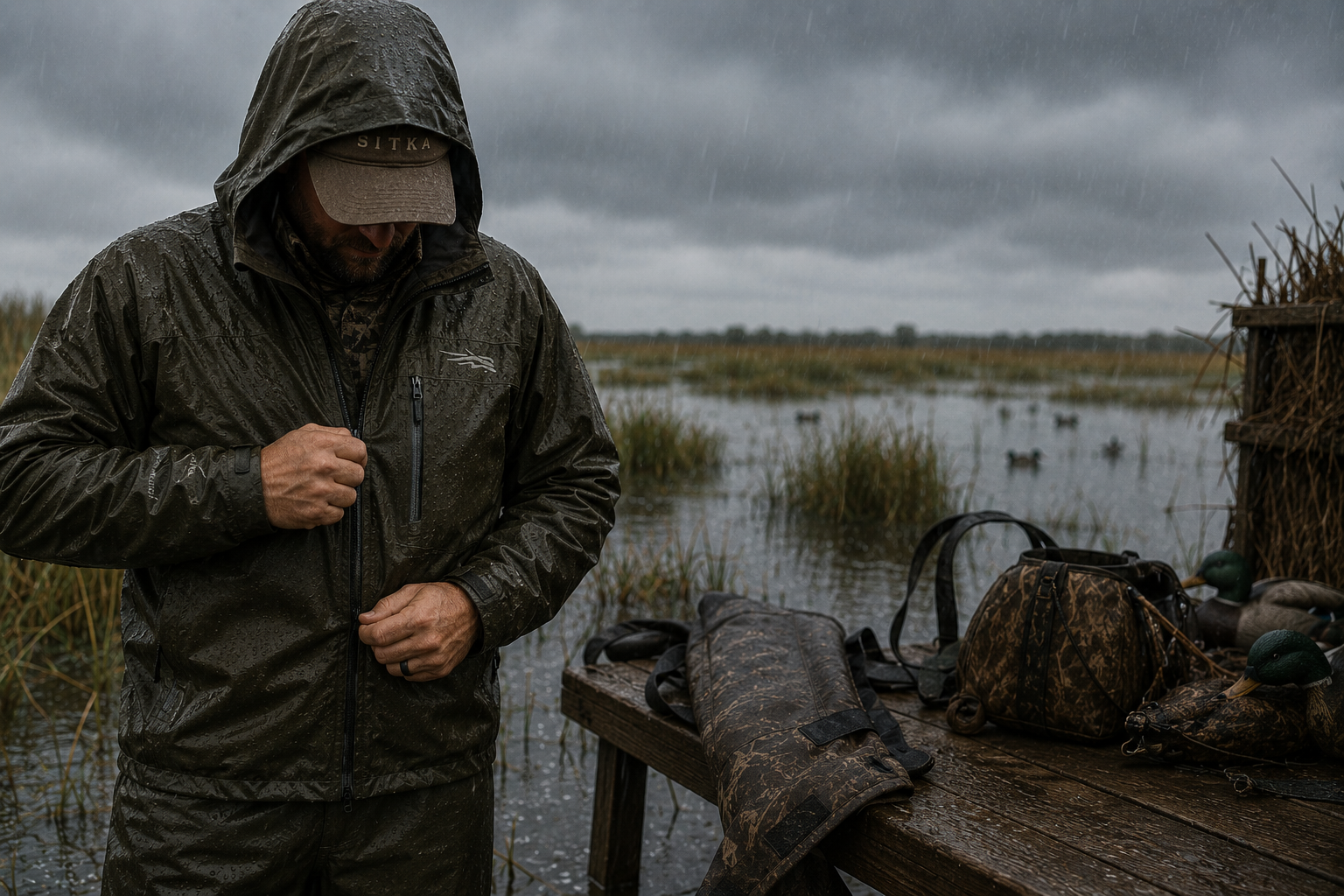
A successful packing list for an Argentina duck hunt must include breathable insulated chest waders, a windproof and waterproof outer shell, steel-rated choke tubes, and modular thermal layers to survive the freezing, damp boat rides of the South American winter marsh without exceeding 15kg domestic airline limits.
Mastering the Winter Marsh Loadout
Unlike the dry, warm fields of a dove hunt, the Argentine wetland during the May-to-August season is brutally cold. Pre-dawn boat rides across the Paraná River Delta will expose you to freezing humidity and biting winds. The core of your packing strategy is thermal retention. Pack high-quality merino wool base layers and a full-service Gore-Tex waterfowl jacket in standard marsh camouflage. However, you must explicitly leave all heavy infrastructure—like decoys, spinning wings, and blind materials—at home. The outfitter provides all large equipment.
| Gear Category | Essential Items to Pack | Items to Leave at Home |
|---|---|---|
| Outerwear | Waterproof parka (Camo), insulated gloves, face mask | Heavy cotton jackets, bright colors |
| Footwear / Waders | Insulated breathable chest waders (or rent at lodge) | Uninsulated rubber boots, hip waders (if in deep delta) |
| Firearm Accessories | Steel-rated choke tubes (LM/M), universal choke wrench | Lead-only chokes, shotgun cleaning kits |
| Ammunition | None (Illegal to fly with) | All shotgun shells (Must buy at lodge) |
The Wader Rental Strategy
Waders are the heaviest and most cumbersome item a waterfowler owns. Packing them often pushes your checked luggage over the strict 15kg (33 lbs) limit enforced by Argentine domestic carriers like Aerolineas Argentinas. To bypass this friction, experienced lodges now maintain extensive rental fleets of full-service waders and boots. If your lodge offers this service, reserve your boot size 60 days in advance and use the saved luggage space to pack high-quality optic and auditory protection.
Can You Bring Duck Hunting Gear to Argentina?
While you can and should bring personal duck hunting apparel like waders, calls, and camouflage jackets to Argentina, U.S. hunters must never pack bulky infrastructure like decoys, spinning-wing attractors, or blind materials. full-service South American outfitters provide all the heavy marsh equipment; you are only responsible for your personal wearable gear and specialized choke tubes.
Beating the Baggage Limits
International and domestic baggage restrictions are the enemy of the traveling waterfowler. Argentine domestic flights (AEP) strictly enforce a 15kg (33 lbs) checked bag limit. Wasting this precious weight capacity on plastic decoys or pop-up blinds is a critical tactical error. Your outfitter employs a team of professional guides who utilize large, locally stored decoy spreads tailored perfectly to the plumage of native species like the Rosy-billed Pochard and Silver Teal.
| Gear Category | Pack in Luggage? | Outfitter Responsibility |
|---|---|---|
| Decoys & Spinners | No (Leave at home) | Provided: Species-specific spreads. |
| Blind Materials & Seats | No (Leave at home) | Provided: Custom-built natural hides. |
| Personal Waders & Boots | Yes (Or rent at lodge) | N/A (Personal fit required). |
| Waterfowl Calls & Chokes | Yes (Bring in carry-on) | Guides call, but hunters can assist. |
The Essential Personal Kit
Your packing strategy must focus entirely on thermal retention and shooting mechanics. Pack high-quality merino wool base layers, a windproof outer shell, and heavily insulated waterproof gloves for the freezing pre-dawn boat rides. A high-lumen headlamp is mandatory for safely organizing your blind bag in the dark while the guides set the spread. Finally, bring your favorite mallard or pintail calls; while guides are expert callers, a standard mallard hen call works exceptionally well for turning Argentine teal.
Rain Gear for the Duck Marsh: Breathability vs Waterproofing
Waterfowl hunting is inherently tied to inclement weather. The most active flight patterns in the Argentine wetlands often coincide with low-pressure systems, driving rain, and biting winds. Staying dry in the blind is not just a matter of comfort; it is a critical safety factor to prevent hypothermia. However, selecting the right rain gear requires navigating the constant trade-off between absolute waterproofing and essential breathability.
The Mixed-Bag Reality
Unlike specialized, standalone waterfowl camps in other parts of the world, an experienced Argentine duck marsh deployment is typically the opening phase of a comprehensive mixed-bag itinerary. A hunter will often transition from a rain-soaked morning bañado directly into a high-volume dove roost or a walked perdiz field by the afternoon. This dynamic schedule demands a versatile rain system that manages both the driving rain of dawn and the rising body heat of an active shooting day.
The Trap of Absolute Waterproofing
Entry-level rain jackets are often constructed from PVC or heavy, rubberized materials. While these garments are completely waterproof and provide an impenetrable shield against the rain, they offer zero breathability.
- The Greenhouse Effect: Getting into a blind requires physical exertion—wading through mud, arranging decoys, and carrying heavy blind bags. Inside a non-breathable jacket, the sweat generated from this exertion becomes trapped. Within an hour, the hunter is completely soaked from the inside out, rendering the jacket counterproductive.
- Restrictive Movement: Heavy rubberized coats are notoriously stiff, severely restricting the fluid shoulder rotation and quick gun mounts required to track fast-crossing Teal or Pintails.
The Breathable Membrane Advantage
The industry standard for high-performance wingshooting gear is the breathable waterproof membrane, such as Gore-Tex or similar proprietary fabrics. These microscopic membranes feature pores that are small enough to block liquid water droplets from the outside, yet large enough to allow vaporized sweat to escape from the inside.
- Active Moisture Management: A breathable shell ensures that as your core temperature rises during physical exertion or the fast-paced action of a passing flock, the excess moisture is vented into the atmosphere.
- The Layering Protocol: A thin, uninsulated breathable shell is the complete exterior layer. It allows the hunter to wear moisture-wicking base layers and merino wool mid-layers beneath it, easily adding or shedding insulation as the unpredictable pampas weather shifts throughout the day.
The Estancia Standard
At full-service properties, concierges advise guests to invest strictly in full-service, breathable shells featuring taped seams and waterproof zippers. When packing for a multi-species expedition, space is at a full-service, and a single, high-quality, lightweight shell is vastly superior to a heavy, insulated raincoat that becomes a liability the moment the sun breaks through the clouds.
Face Concealment in the Duck Marsh: Paint vs Masks
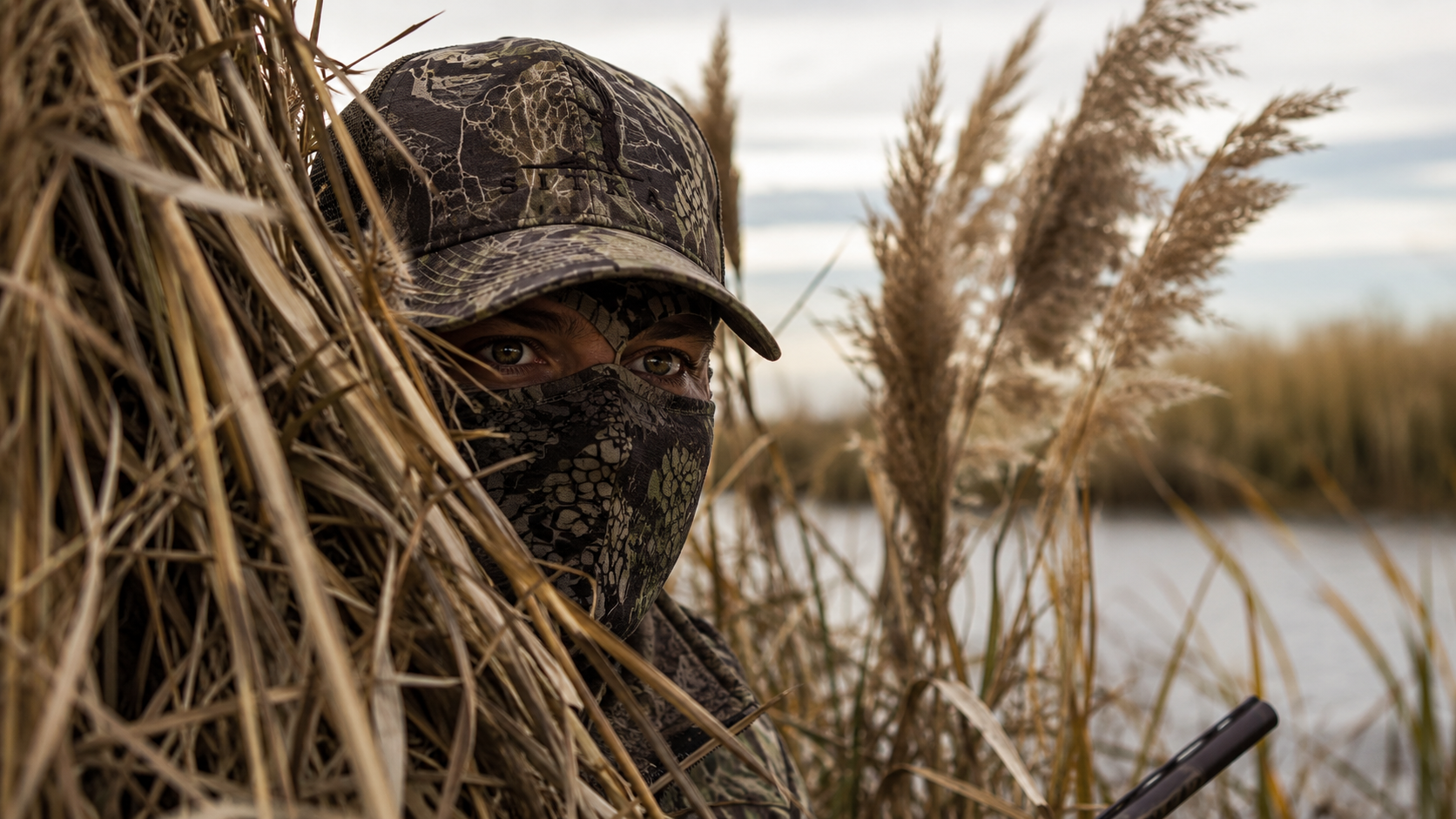
When hunting the pristine wetlands of Argentina, hunters quickly learn that local waterfowl possess incredibly sharp eyesight. In the low-light conditions of an early morning bañado, the glare and movement of a bare human face looking up at the sky act like a beacon, causing wary ducks to flare well out of shotgun range. Effective face concealment is absolutely critical to a successful hunt, but choosing the right method requires balancing stealth with comfort.
The Traditional Route: Camo Face Paint
For decades, face paint has been a staple in the duck blind. The primary advantage of grease or mud-based camo paint is that it provides excellent concealment without covering your mouth or ears. This means zero interference when blowing a duck call and absolutely no risk of fogging up your shooting glasses.
However, the major drawback is the cleanup. High-volume Argentine duck hunts often transition quickly from the muddy marsh back to the refined upscale of the estancia. Spending twenty minutes scrubbing stubborn grease paint off your face before sitting down to a full-service asado is a friction point most executives prefer to avoid.
The Tactical Choice: Mesh Masks and Neck Gaiters
For the modern wingshooter, lightweight mesh masks and camouflage neck gaiters have become the preferred choice in Argentina. They offer instant concealment that can be pulled up or down in seconds. When the hunt is over, you simply take the mask off and you are instantly ready for the ride back to the lodge. They also provide an extra layer of warmth against the biting wind of an Argentine winter morning.
- Breathability is Key: The main issue with solid fabric gaiters is that your warm breath is forced upward, instantly fogging your shooting glasses or safety lenses.
- The Solution: Always choose a highly breathable mesh mask or a gaiter with a dedicated, laser-cut mouth vent. This directs your condensation forward and away from your eyewear.
The Estancia Recommendation
While both methods hide you from the birds, masks offer a far more streamlined experience. Bringing a couple of lightweight, well-ventilated face masks allows you to adapt to changing temperatures in the blind while keeping your face completely clean for the post-hunt celebrations.
Tactical Field Note: If you wear prescription glasses or safety lenses in the blind, avoid heavy fleece neck gaiters pulled over your nose. The resulting fog will render you completely blind just as the ducks commit to the decoys. Invest in a dedicated, structured waterfowl mask with an open mouth port, and always keep your face angled down under the brim of your hat until the guide calls the shot.
Blind Bags vs Waterproof Backpacks in the Argentine Marsh
Protecting critical survival gear, camera electronics, and dry ammunition in the freezing, water-logged environment of the Paraná River Delta requires hunters to ruthlessly evaluate their luggage, abandoning traditional canvas blind bags for impenetrable roll-top waterproof backpacks.
The Failure of Traditional Canvas
In a dry dove roost or a manicured goose pit in the United States, a classic waxed-canvas or cordura nylon blind bag is perfectly adequate. In the Argentine duck marsh, it is a liability. Whether you are hunting from a deep-water mud boat in Santa Fe or wading through a flooded pasture in Buenos Aires, water ingress is an absolute certainty. Mud boats fill with inches of standing water from the river spray and the constant shaking of wet Labrador retrievers. If you set a traditional zippered nylon blind bag on the deck of a boat or the muddy floor of a pasture pit, the water will instantly seep through the bottom fabric and the non-sealed zippers, completely destroying your spare camera lenses, soaking your backup thermal gloves, and ruining your shotgun shells.
| Gear Storage Type | Water Resistance Level | Performance in the Argentine Marsh |
|---|---|---|
| Traditional Canvas Blind Bag | Low (Water-resistant only). | Fails. Soaks up standing water from the bottom of the mud boat. |
| Zippered Nylon Backpack | Moderate (DWR coating). | Poor. Zippers leak during heavy rain or when splashed by retrieving dogs. |
| Roll-Top PVC Dry Bag | Absolute (100% Submersible). | The experienced Standard. Impervious to mud, rain, boat spray, and submersion. |
The Roll-Top Mandate
To survive the South American winter marsh, you must deploy the technology used by whitewater rafters. A 30-liter, heavy-duty PVC roll-top backpack (such as those made by Yeti, Simms, or basic marine outfitters) is mandatory. These bags feature welded seams and zero zippers. You simply roll the top down and clip it shut, creating a watertight, buoyant vault. You can drop a roll-top bag directly into a puddle of freezing water in the bottom of the boat, and your expensive drone batteries and dry Merino wool backup layers will remain reliably protected. Furthermore, the backpack configuration keeps both of your hands free while you are carefully wading through deep mud in the dark.
Related AWSORG Field Intelligence
- Duck Hunting in Argentina: Complete Guide
- Duck Hunting Argentina Cost: What Hunters Should Know
- Shotguns & Non-Toxic Ammunition for Argentina Duck Hunting
- Waders and Cold-Weather Clothing for Argentina Duck Hunting
- Argentina Duck Hunting Limits & Regulations by Province