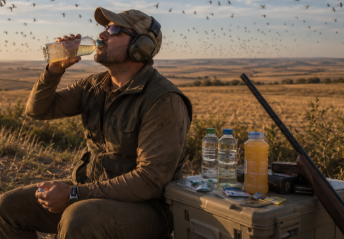
High-volume dove hunting in Argentina demands absolute adherence to firearm safety rules and strict blind etiquette due to the rapid pace of shooting and proximity of other blinds. Maintaining a strict 10-to-2 o'clock muzzle-safe firing window and practicing clear, disciplined communication with your field assistant (hunting assistant) are the absolute lines separating an experienced sporting trip from a catastrophic field accident.
The Core Safety Rules of the Fields
In a dense agricultural roost or feeding field, multiple hunting blinds are deployed concurrently across the landscape. Because thousands of birds are moving dynamically in all directions, your situational awareness must be well-organized. The most critical rule is maintaining your designated firing arc. You must never swing your barrel horizontally tracking a low bird, as this will inevitably point your loaded muzzle toward neighboring blinds, vehicles, or walking hunting assistants.
| Safety Metric | Field Requirement | Operational Purpose |
|---|---|---|
| Safe Firing Window | Strictly 10 o'clock to 2 o'clock vertical arc. | Prevents crossfire into neighboring blinds or low-level staff. |
| Muzzle Direction | Pointed skyward or downrange when resting. | Eliminates accidental discharges during reloads and weapon swaps. |
| Weapon Hand-Off | Action locked open, barrel up. | Safe mechanical transition between hunter and hunting assistant. |
| Alcohol Policy | Strict zero-tolerance until shooting stops. | Absolute sobriety mandated during all operational field hours. |
Blind Etiquette and Team Mechanics
Your relationship with your assigned hunting assistant is built on mechanical trust. He is there to assist you, not to be put in danger. When your shotgun action locks back empty, keep the gun vertical and let him take it from your hands. Never turn around in the blind with a weapon to look at incoming birds from behind, as this sweeps the muzzle directly across your hunting assistant's chest. If birds are flying behind your position, you must physically pivot your entire body and stance before mounting the firearm.
Recoil Pads for Argentina Dove Hunting: Shields vs Gun Pads
Surviving the large kinetic energy of an Argentina high-volume dove hunt requires international wingshooters to explicitly utilize wearable, strap-on gel recoil shields rather than relying on cumbersome slip-on gun pads that alter the shotgun's critical length of pull.
The Physics of 2,000 Rounds
Even with a light-recoiling, gas-operated 20-gauge semi-automatic, firing 1,500 to 2,000 rounds in a single day transfers an immense amount of cumulative kinetic energy into the pectoral muscle and the shoulder pocket. By day two, without protection, deep tissue bruising occurs, leading directly to a painful flinch that destroys accuracy. Novice hunters often attempt to solve this by purchasing a thick, rubber "slip-on" recoil pad that slides over the stock of the rental shotgun. This is a critical tactical error. Adding an inch of rubber to the stock fundamentally alters the gun's Length of Pull (LOP), causing the hunter to catch the stock on their clothing during rapid gun mounts and ruining their swing mechanics.
| Recoil Solution | Performance in High-Volume Hunting | Tactical Verdict |
|---|---|---|
| Slip-On Rubber Gun Pad | Alters Length of Pull; snags on shirts; clumsy to move between rental guns. | Highly Discouraged. |
| Wearable Strap-On Gel Shield | Disperses energy across a wide surface area; independent of the firearm. | The Industry Standard (e.g., PAST Mag Plus). |
| Built-In Shirt Pad Pockets | Holds thin foam inserts; aesthetically clean but often too thin for high volume. | Acceptable for lower-volume pigeon/duck hunts. |
| Thick Winter Jackets | Naturally absorbs recoil, but causes severe heat exhaustion in the blind. | Useless during midday or summer hunts. |
The Wearable Shield Advantage
The established professional standard for the Argentine roost is the wearable recoil shield. Brands like PAST or Caldwell manufacture strap-on shields containing energy-absorbing gel or high-density memory foam. You strap the shield tightly across your chest over your lightweight shooting shirt. Because the shield is attached to your body, it remains perfectly positioned regardless of how many times you swap hot rental guns with your hunting assistant. Ensure you adjust the straps so the gel pad sits deeply in the natural 'pocket' of your shoulder, exactly where the buttstock makes contact.
Physical Preparation for High-Volume Dove Hunting
A high-volume dove hunt in Córdoba Province is not merely a vacation; it is a grueling athletic event that requires international wingshooters to proactively prepare their shoulder musculature, core stability, and cardiovascular endurance to survive firing 1,500 to 2,000 shotgun shells a day.
The Biomechanical Toll of the Roost
In standard North American hunting, fatigue rarely factors into accuracy because the sheer volume of shots is low. In Argentina, physical exhaustion is the primary reason experienced shooters begin to miss targets by the third day of their trip. Lifting a 6.5-pound shotgun to your cheek 2,000 times requires immense anterior deltoid endurance. Absorbing the kinetic recoil requires strong pectoral and latissimus dorsi muscles. Most critically, standing in a feedlot and rotating your torso to track fast-crossing targets for six hours places severe rotational strain on your lower back. If your core is weak, your posture will collapse, forcing you to lean backward and absorb the recoil directly into your spine.
| Physical Strain | Biomechanical Consequence | Targeted Training Solution |
|---|---|---|
| Shoulder / Deltoid Fatigue | Inability to mount the gun quickly; dropping the barrel. | High-repetition lateral raises with light dumbbells. |
| Lower Back Strain | Leaning away from the gun; severe bruising. | Core rotational exercises (Russian twists) and planks. |
| Grip & Forearm Fatigue | Fumbling safety mechanisms; poor trigger control. | Farmer's carries and grip crushers. |
| Acoustic Shock Fatigue | Target panic and headache from continuous firing. | N/A (Manage strictly with full-service electronic earplugs). |
The 30-Day Pre-Hunt Regimen
You cannot 'cram' for a high-volume hunt. experienced outfitters recommend initiating a dedicated physical regimen at least 30 days prior to your flight to Buenos Aires Province. You do not need to lift large weights; the goal is muscular endurance, not peak strength. Incorporate light resistance bands into your daily routine, mimicking the exact motion of mounting a shotgun. Furthermore, you must harden your shoulder. Visit your local sporting clays range and shoot a minimum of 200 rounds over a weekend to condition your shoulder pocket and test the fit of your wearable gel recoil shield.
Safety Protocols: Clearing Shotgun Jams in the Dove Blind
When a rental semi-automatic inevitably suffers a mechanical failure or a "stovepipe" jam during the blistering pace of a 1,000-bird dove flight, hunters must execute strict safety protocols to clear the weapon without endangering the blind staff.
The Anatomy of the High-Volume Jam
In the Argentine dove roost, you are pushing firearms to their absolute thermal limits. Jams are not a possibility; they are a mathematical certainty. The most common failures are the "Stovepipe" (where an empty hull fails to eject and gets caught horizontally in the receiver) and the "Failure to Feed" (where extreme carbon buildup stops the bolt from pushing the next shell fully into the chamber). When the gun goes *click* instead of *bang*, the immediate hunter instinct is to drop the barrel, look down at the receiver, and start ripping at the bolt handle. This is a large safety violation. Dropping the barrel in a cramped blind often points the muzzle directly at the *secretario* (hunting assistant) standing next to your stool.
| Type of Jam | Mechanical Cause | Immediate Safety Threat |
|---|---|---|
| The Stovepipe | Weak extraction due to a dirty gas piston. | Hunter attempts to pry the hot hull out with bare fingers. |
| Failure to Feed | Carbon sludge locking the bolt carrier. | Hunter points the muzzle at their feet while forcing the bolt closed. |
| The Hang-Fire | Faulty primer in the domestic ammunition. | Lethal. Shell may detonate seconds after the trigger is pulled. |
The Handoff Protocol
Preventing Hand Blisters and 'Dove Thumb' in High-Volume Hunts
Surviving the relentless mechanical friction of an Argentina high-volume dove hunt requires international wingshooters to proactively armor their firing hand against the deep, painful friction blisters universally known as "Dove Thumb."
The Mechanics of Dove Thumb
In standard hunting environments, hunters never fire a shotgun enough to generate significant localized friction. In the Córdoba or Santiago del Estero feedlots, the dynamic completely changes. "Dove Thumb" is a severe friction blister that develops on the knuckle of the thumb or the inside knuckle of the index finger of your firing hand. It is caused by the repetitive, high-speed recoil driving the metal edge of the shotgun's trigger guard or the receiver's safety button directly into the soft tissue of your hand. Once the blister forms and tears open, every subsequent trigger pull sends a searing jolt of pain through your hand, effectively destroying your concentration and ruining the remainder of your trip.
| Friction Point | Biomechanical Cause | Immediate Consequence |
|---|---|---|
| Inside Thumb Knuckle | Rubbing against the top of the receiver grip under recoil. | Painful torn skin; inability to grip the gun securely. |
| Index Finger Knuckle | Slamming into the back of the metal trigger guard. | Severe flinching; pulling shots low and left. |
| Leading Hand Palm | Gripping the hot, abrasive checkered fore-end of the shotgun. | Raw skin and heat burns from the barrel. |
The Proactive Armor Protocol
Preventing Shoulder Injury: Stance and Recoil
Surviving the large kinetic transfer of an Argentina high-volume dove hunt requires international wingshooters to combine physical gel recoil shields with an aggressive, forward-leaning shooting stance that actively absorbs the impact of 2,000 daily shotgun shells.
The Biomechanics of the Mount
In standard North American hunting, a hunter can often get away with poor biomechanics because they only fire a few times a day. In the Córdoba dove roost, poor mechanics lead to severe injury. If you stand straight up and lean backward away from the gun, your shoulder takes 100% of the blunt-force impact, driving your spine backward. To survive high volume, you must adopt an aggressive, forward-leaning combat stance. Put your weight on your leading foot (the left foot for a right-handed shooter), lean your torso into the shotgun, and drive your cheek down onto the comb. This allows your entire body to act as a shock absorber, rolling with the recoil rather than fighting it.
| Biomechanical Error | Physical Consequence | Tactical Correction |
|---|---|---|
| Leaning Backward | Severe shoulder bruising; loss of balance. | Shift 60% of your body weight to the leading foot. |
| Loose Shoulder Pocket | Gun 'punches' the shoulder upon firing. | Pull the stock firmly into the natural pocket of the shoulder. |
| Lifting the Head | Comb slaps the cheekbone; blurred vision. | Lock the cheek tightly against the wood; bite down on molars. |
The Hardware Buffer
Stance alone cannot completely negate the laws of physics. You must deploy hardware mitigation. The complete setup for an endurance shooter is renting a gas-operated 20-gauge semi-automatic (which bleeds off gas pressure to reduce kick) combined with a wearable, strap-on gel recoil shield (such as a PAST Mag Plus). If you combine an aggressive forward stance, a gas gun, and a full-service gel shield, you can easily shoot 2,500 rounds in a single day with zero bruising or soreness the following morning.
Shooting Gloves for Argentina Doves: Leather vs Synthetic
Surviving the relentless mechanical friction of firing 2,000 rounds a day requires international wingshooters to deploy high-performance shooting gloves, balancing the heat-resistance of traditional leather against the breathable agility of modern synthetics.
The Dual Threat: Barrel Heat and Blisters
In a standard North American upland hunt, gloves are primarily worn for warmth or briar protection. In an Argentine dove roost, gloves are critical safety equipment. When you fire a 20-gauge semi-automatic hundreds of times an hour, the barrel and gas shroud reach temperatures that will instantly blister bare skin. Simultaneously, the constant, aggressive reloading and the repetitive friction of your trigger finger against the metal trigger guard (often resulting in the infamous "Dove Thumb") will tear your skin open by the second day. You must wear a glove on your leading (fore-end) hand to mitigate heat, and a specialized or modified glove on your firing hand to prevent mechanical blisters.
| Glove Material | Thermal Resistance (Hot Barrels) | Breathability & Comfort |
|---|---|---|
| Unlined Leather (Deerskin/Cabretta) | Excellent; highly resistant to melting against hot steel. | Poor in the summer; can become slick with sweat. |
| Modern Synthetic (Mesh/Spandex) | Poor; thin nylon will melt if it touches a 300°F barrel. | Excellent; wicks moisture and provides a skin-tight grip. |
| Hybrid (Leather Palm / Mesh Back) | Good; protects the palm while venting heat from the back. | The optimal compromise for high-volume shooters. |
The Single-Glove Strategy
Hydration and Electrolyte Protocols for High-Volume Doves
High-volume wingshooting in Argentina is not just a recreational activity; it is a physical endurance sport. Firing thousands of rounds a day under the sun of the pampas takes a severe toll on the human body. Dehydration is the single most common factor that degrades a shooter’s performance, leading to headaches, visual fatigue, and a catastrophic drop in reaction time. Establishing a strict hydration protocol is critical to surviving the roost.
The Hidden Danger of the Pampas
The Argentine climate, particularly during the peak dove season, can be deceptive. Constant dry breezes often wick sweat away before you realize how much fluid you are losing. By the time you actually feel thirsty in the blind, you are already mildly dehydrated. Once dehydration sets in, your eyes struggle to maintain the hard focus required to track fast-moving birds, and your body will feel the physical punishment of recoil much more acutely.
Electrolytes Over Pure Water
A common mistake among visiting hunters is attempting to rehydrate strictly with plain bottled water. When you sweat, you are losing critical minerals—primarily sodium, potassium, and magnesium.
- The Dilution Problem: Pounding plain water without replacing minerals can actually dilute your body's sodium levels, a condition that exacerbates muscle cramps and fatigue.
- Powdered Supplements: The most efficient logistical solution is to pack high-quality, individual electrolyte powder packets in your shooting bag. These take up zero space in your checked luggage and can be instantly mixed into a water bottle in the field.
The Estancia Infrastructure
Related AWSORG Field Intelligence
- Dove Hunting in Argentina: Complete Guide
- Argentina Dove Hunting Cost & Shell Budget
- Argentina Dove Hunting Regions: Córdoba, Entre Ríos and Beyond
- Best Time for Dove Hunting in Argentina
- Dove Hunting Near Buenos Aires: Day Hunts and Lodge Options
- What to Pack and Wear for Dove Hunting in Argentina