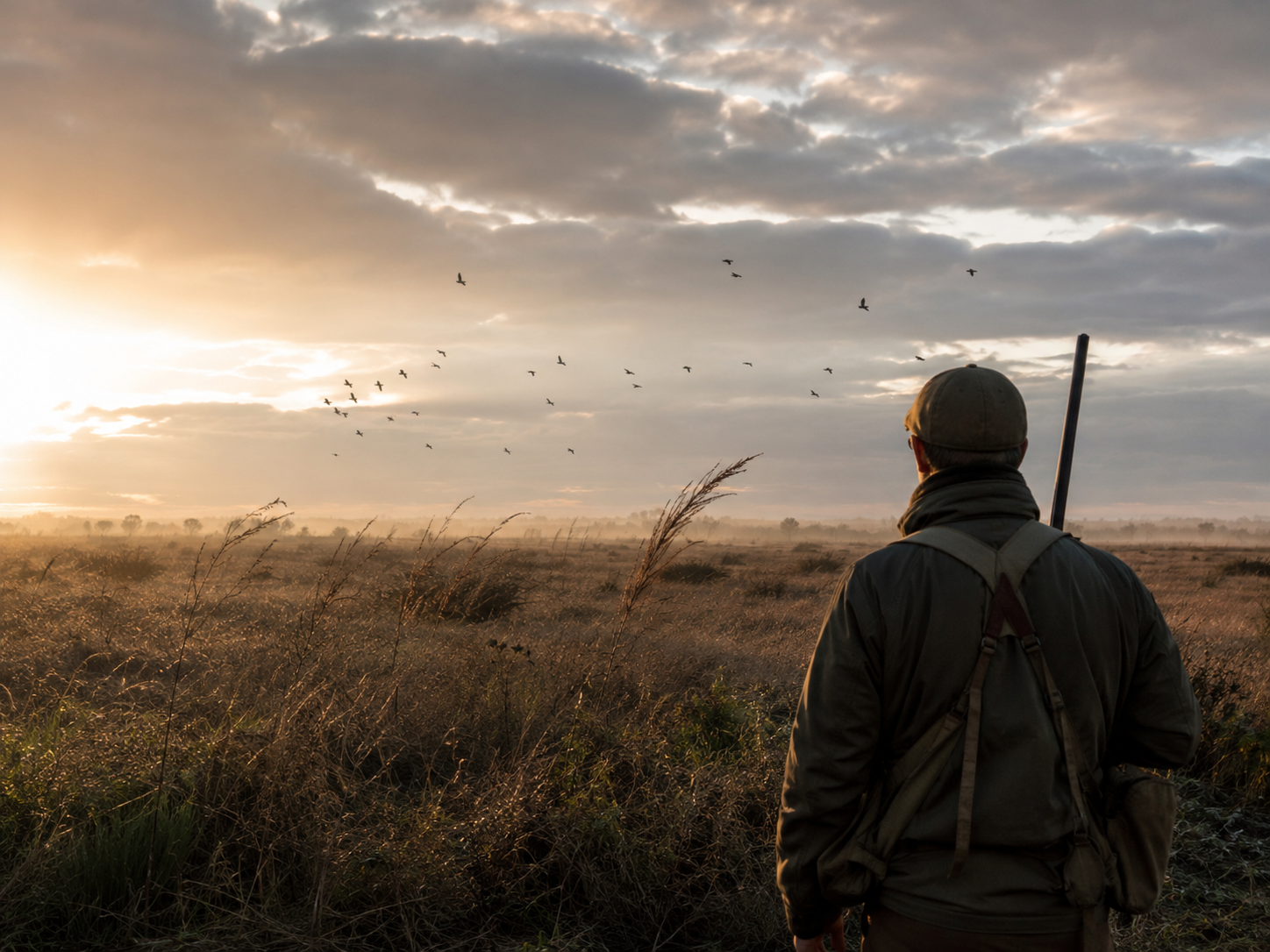
Dominating a high-volume Argentina dove roost requires hunters to seamlessly alternate their shotgun mechanics between two distinctly different ballistic challenges: the rapid, horizontal sustained lead of the crossing shot, and the blind, barrel-covering geometry of the incoming overhead shot.
The Fast Crossing Shot
When you are positioned on the edge of an agricultural feedlot, the majority of your engagements will be crossing shots. The doves are flying from left to right (or right to left) across your field of vision, often utilizing a tailwind to reach speeds of 40 to 50 mph. This requires a smooth, aggressive "sustained lead." You must mount the shotgun, push the muzzle ahead of the bird's flight path, match its speed, and pull the trigger while keeping the gun moving. The most common point of failure is stopping the barrel. If the shotgun stops moving the millisecond you pull the trigger, the shot string will pass harmlessly behind the dove's tail feathers.
Shot PresentationVisual FocusMechanical ExecutionCommon ErrorCrossing (Left to Right)The bird's beak.Push barrel ahead of the bird; maintain speed; follow through.Stopping the swing; shooting behind the bird.Incoming (Overhead)The bird's belly/chest.Start behind the bird, swing up *through* it, fire as the barrel covers the bird.Lifting the head off the stock to see the bird over the barrel.
The Incoming Overhead Shot
The incoming overhead shot—frequently encountered during the late afternoon as large flocks return high to the timber roost—is the most psychologically difficult shot for a novice. As the dove flies directly toward and over your blind, you must execute a "swing-through" mechanic. You start the muzzle behind the bird, accelerate the barrel up through the bird's flight line, and pull the trigger exactly as the barrel completely blocks the bird from your vision. Because the human brain hates shooting at what it cannot see, hunters naturally lift their cheek off the stock to peek at the target, causing the muzzle to drop and the shot to pass harmlessly under the dove.
Shooting Seated vs Standing in the Argentina Dove Roost
Surviving a 2,000-round day in the Argentine dove roost requires hunters to actively manage their physical fatigue by alternating between an aggressive standing combat stance and the controlled, rotational mechanics of shooting from a seated field stool.
The Biomechanics of the Stand
Standing is the absolute optimal position for executing well-organized shotgun mechanics. When you stand with your feet shoulder-width apart and your weight shifted 60% onto your leading foot (an aggressive forward stance), you unlock your entire lower body. This allows your hips to act as a smooth, rotating turret. When a dove crosses from left to right at 40 mph, a standing hunter can track the bird effortlessly across a large 180-degree horizontal arc without breaking their cheek weld. Furthermore, standing allows your legs to act as natural shock absorbers, mitigating the blunt force of the 20-gauge recoil before it compresses your spine.
| Shooting Posture | Primary Advantage | Tactical Limitation |
|---|---|---|
| Standing (Forward Lean) | Maximum hip rotation; large tracking arc; excellent recoil absorption. | Highly fatiguing on the lower back and legs over a 4-hour session. |
| Seated (Field Stool) | Zero leg fatigue; conserves immense physical energy. | Hips are locked; severely restricts the horizontal tracking arc. |
The Necessity of the Field Stool
Despite the ballistic advantages of standing, maintaining that posture for six hours a day across a four-day trip is physically impossible for most hunters. Fatigue destroys form. When your lower back tires, you will naturally start leaning backward, which causes the gun to brutally punch your shoulder. To prevent this, full-service outfitters equip every blind with a rotating, padded field stool. When the flight slows down, or your back begins to ache, sit down. However, you must adjust your mechanics. Because sitting locks your hips in place, you cannot smoothly track a bird from 9 o'clock all the way to 3 o'clock. You must "shorten your window." Wait until the dove enters the direct 11-to-1 o'clock airspace directly in front of you, execute a short, fast upper-body swing, and snap-shoot the target.
The Mental Game of High-Volume Dove Hunting
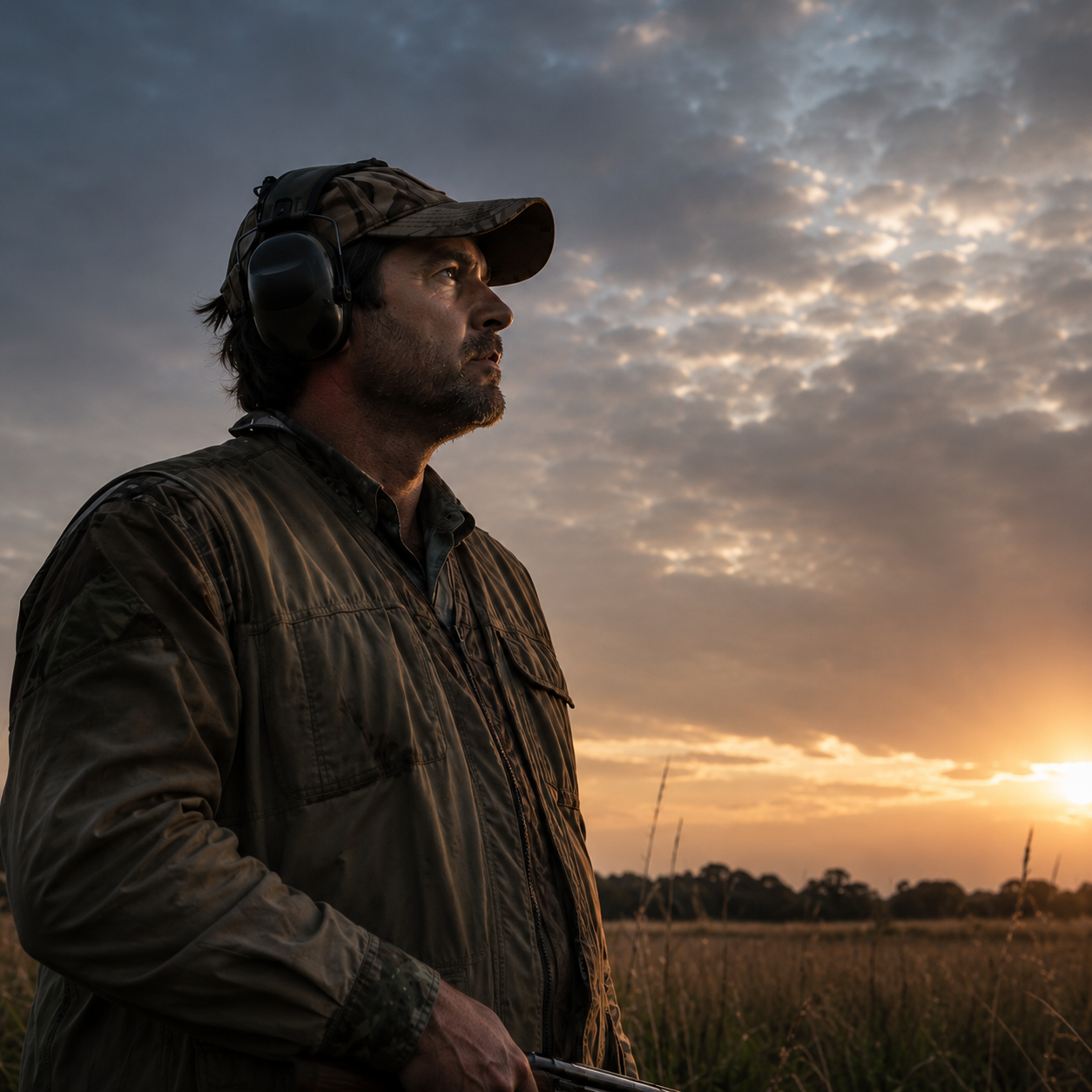
Executing a 1,000-round day in the Argentine dove roosts is not just a physical endurance test; it is a grueling psychological marathon that requires hunters to master target isolation, beat visual fatigue, and conquer the overwhelming chaos of a blackened-sky flight line.
Defeating Target Panic
The most common psychological failure for first-time international hunters is "flock shooting." When an American hunter, accustomed to seeing one or two birds an hour, suddenly looks up and sees 5,000 eared doves streaming overhead simultaneously, the brain short-circuits. The hunter mounts the gun, aims at the large cloud of birds rather than a single target, and pulls the trigger. The result is a clean miss. To shoot high volume accurately, you must employ ruthless mental isolation. You must pick a single bird out of the swarm, lock your eyes onto its beak, execute a sustained lead, and completely ignore the thousands of other birds filling your peripheral vision.
Mental ChallengeSymptom in the BlindTactical CorrectionFlock ShootingMissing easy shots by aiming at the center of a large group.Focus exclusively on the beak of one single bird.Visual FatigueLosing track of the barrel lead; blurry vision.Close eyes for 60 seconds; switch lens colors on shooting glasses.Recoil AnticipationFlinching or closing eyes just before pulling the trigger.Take a 15-minute break; double-check gel recoil pad placement.Pacing BurnoutShooting frantically for 30 minutes and exhausting the arms.Establish a steady, rhythmic firing cadence. It is a marathon.
The Zen of the Swing
High-volume shooting should eventually become a flow state. experienced shooters do not consciously think about the mechanical steps of mounting, leading, and firing. They rely on muscle memory. However, to reach this state, you must avoid frustration. If you miss five easy crossing shots in a row, do not get angry and speed up your firing rate. Anger destroys smooth barrel mechanics. Lower the shotgun, drink a bottle of water, take a deep breath, and reset. Ask your hunting assistant where you are missing (usually behind the bird), adjust your lead, and start fresh on the next flock.
The 100-Bird Streak: Accuracy Drills for High-Volume Doves
Transforming a high-volume Argentina dove hunt from a chaotic barrage of gunfire into a masterclass of wingshooting requires hunters to implement focused accuracy drills—such as the 100-Bird Streak—to build muscle memory, correct sustained leads, and conquer target panic.
The Danger of Trigger Frustration
When a novice hunter steps into an Argentine feedlot and sees a flock of 5,000 birds, the immediate instinct is to fire as rapidly as the 20-gauge will cycle. This "spray and pray" mentality destroys accuracy. The hunter begins pulling their head off the stock to watch the bird fall before pulling the trigger, or they stop the barrel swing entirely. The hit ratio plummets to 20%, the shoulder bruises rapidly, and frustration sets in. High-volume hunting is only valuable if it is used to refine technique. You must use the infinite supply of birds to isolate specific ballistic problems.
| Accuracy Drill | Execution in the Blind | Tactical Benefit |
|---|---|---|
| The 100-Bird Streak | Attempt to shoot 100 birds with the fewest possible misses. | Forces hyper-focus on target isolation and ethical shot selection. |
| The Single-Shell Load | Instruct the hunting assistant to load only ONE shell at a time. | Eliminates the crutch of the fast follow-up shot; mandates a perfect first mount. |
| Angle Isolation | Spend 30 minutes shooting ONLY high-left crossing targets. | Builds deep muscle memory for specific, difficult flight trajectories. |
| The Blind Mount | Keep the gun low until the bird is exactly in the kill pocket. | Prevents tracking the bird for too long, which leads to stopping the swing. |
Executing the 100-Bird Streak
The 100-Bird Streak is a drill utilized by veteran wingshooters to enforce discipline. The goal is not speed; the goal is perfection. You announce to your hunting assistant that you are beginning the drill. You only mount your shotgun when a single, distinct eared dove enters the optimal 20-to-30 yard crossing window. You establish a hard focus on the bird's beak, push the barrel smoothly past the target, and fire while keeping the gun moving. If you miss, you must diagnose why (usually shooting behind or lifting your head) before taking the next shot. Achieving 100 birds in under 125 shells is the hallmark of an experienced shot.
Mastering the Crossing Shot: Forward Lead in the Dove Roost
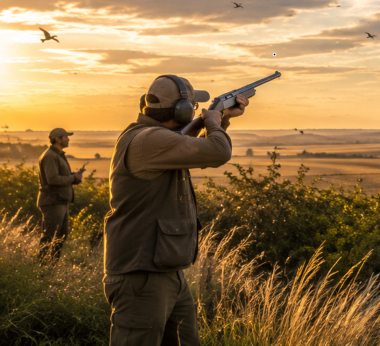
High-volume dove shooting in Argentina provides the complete laboratory for shotgunners. With millions of Eared Doves flying in large, erratic swarms, hunters are presented with every conceivable angle, height, and speed. However, the most frequent—and most frequently missed—presentation in the pampas is the fast crossing shot. Mastering this 90-degree trajectory requires a fundamental understanding of forward lead and disciplined barrel movement.
The Anatomy of a Miss
When a hunter misses a crossing dove, 90 percent of the time, the shot string passes harmlessly behind the bird's tail feathers. This happens for two primary reasons: visually checking the shotgun bead and stopping the swing. When a shooter tries to aim a shotgun like a precision rifle, checking the barrel's relationship to the target, the gun inevitably slows down or stops the exact moment the trigger is pulled. By the time the pellets travel 30 yards through the air, the fast-flying dove is already three feet further down its flight path.
Two Approaches to Forward Lead
To consistently crush crossing doves, you must place the shot string in the empty air ahead of the bird, allowing the dove to fly into the expanding pattern. There are two primary techniques to achieve this in the roost:
- The Swing-Through Method: Excellent for hunters finding their rhythm. You start your gun mount behind the dove, accelerate the barrel through the bird's body, and pull the trigger just as the muzzle passes the beak. The aggressive momentum of your swing automatically provides the necessary forward lead.
- The Sustained Lead Method: The technique utilized by experienced veteran wingshooters. As you mount the gun, you immediately place the muzzle ahead of the flying dove. You match the bird's speed with your swing, maintaining a deliberate visual gap between the barrel and the bird, and pull the trigger while keeping the gun moving. This requires more experience but results in a highly efficient, smooth shooting style that reduces fatigue.
The Importance of Follow-Through
Regardless of which method you employ, the absolute most critical component of a crossing shot is the follow-through. You must keep the shotgun barrel moving along the bird's flight path even after the shell fires. Think of it like a golf swing or a tennis backhand—stopping the motion at the exact point of impact ruins the physical mechanics and guarantees a miss behind the target.
The 10-to-2 O'Clock Firing Arc: Dove Blind Safety Explained
Surviving the chaotic, high-volume environment of an Argentine dove roost requires absolute ballistic discipline; outfitter guides enforce a strict "10-to-2 o'clock" vertical firing arc to guarantee the physical safety of adjacent hunters and roaming field staff.
The Geometry of the Firing Line
When you are deployed into a commercial feedlot or a scrub forest perimeter, you are rarely hunting alone. full-service estancias set their blinds in a linear formation, typically spaced 40 to 60 yards apart, to intercept large crossing flight lines. Because you are swinging a 20-gauge shotgun at fast, erratic targets hundreds of times an hour, the temptation to track a bird as it flies past your blind and shoots behind you is immense. This is a lethal error. "Swinging through the line" points your muzzle directly at the hunter in the adjacent blind. To neutralize this threat, guides enforce the 10-to-2 o'clock rule. Imagine standing in the center of a clock face, looking straight ahead at 12 o'clock. You are only permitted to mount your gun and fire at targets that exist between the 10 o'clock and 2 o'clock positions in the sky directly in front of you.
| Firing Zone | Tactical Definition | Safety Mandate |
|---|---|---|
| 10 to 2 o'clock (Front) | The Primary Kill Box. | 100% clear to engage high and medium-altitude crossing birds. |
| 8 to 10 & 2 to 4 (Flanks) | The Blind Perimeters. | Strictly forbidden. This is where your hunting partners are stationed. |
| 4 to 8 o'clock (Rear) | Behind the Line. | Strictly forbidden. Roaming head guides and supply trucks operate here. |
The Role of the hunting assistant in Enforcement
Shooting with Both Eyes Open: Vision Tactics for Doves
Surviving the high-speed chaos of an Argentine dove roost requires international wingshooters to completely maximize their peripheral vision and depth perception by mastering the technique of shooting with both eyes open.
The Liability of the Closed Eye
Many traditional rifle hunters and novice shotgunners naturally close their non-dominant eye when mounting a firearm to align the bead with the target. In a high-volume dove feedlot, closing one eye is a severe tactical liability. Closing an eye instantly eliminates 50% of your peripheral vision and completely destroys your natural binocular depth perception. When a dove is crossing at 40 mph at a distance of 35 yards, you cannot accurately calculate its speed or distance with one eye. Furthermore, Eared Doves fly in large swarms. By keeping both eyes open, your peripheral vision is already acquiring the second and third bird in the flock while your primary focus shatters the first target.
| Visual Technique | Impact on Target Acquisition | Depth Perception |
|---|---|---|
| One Eye Closed (Rifle Style) | Tunnel vision; easily lose the target if it dips. | Destroyed; impossible to judge forward lead accurately. |
| Both Eyes Open (Hard Focus) | large peripheral awareness; fast target transitions. | Optimal; brain naturally calculates speed and distance. |
Conquering Eye Dominance
Executing the Double and Triple on Argentine Doves
Transitioning from a novice shooter to an experienced high-volume wingshooter in Argentina requires mastering the "Double" and the "Triple"—the ability to drop multiple Eared Doves from a single crossing flock before the shotgun runs empty.
The Trap of Flock Shooting
When a swarm of fifty Eared Doves suddenly erupts over the tree line, the visual overload is staggering. The immediate instinct of an amateur hunter is to point the barrel at the center of the large, swirling cloud and pull the trigger rapidly, assuming the dense pattern of a 20-gauge will inevitably hit something. This is known as "flock shooting," and it is the fastest way to empty a 5-shot Beretta without touching a single feather. Doves fly with substantial gaps between them. To drop multiple birds, you must exercise absolute, ruthless visual discipline. You must entirely ignore the flock and isolate a single, specific bird.
| Shooting Tactic | Visual Focus | Lethal Result |
|---|---|---|
| Flock Shooting | Looking at the entire mass of birds. | Misses; shot string passes through empty gaps. |
| The Single | Hard focus on one bird's beak. | One dead bird; gun stops moving. |
| The Double / Triple | Kill the trailing bird first, smoothly transition focus to the leader. | Multiple hits; fluid, unbroken mechanical swing. |
The Trailing-to-Leading Transition
The secret to executing a clean double lies in target selection order. If a line of three doves is crossing from left to right, you must always shoot the last (trailing) bird in the line first. If you shoot the leading bird first, the explosion will cause the trailing birds to instantly flare backward or dive erratically, destroying your secondary shot opportunity. By mounting your shotgun and executing a sustained lead on the trailing bird, you drop it cleanly. Because your shotgun barrel is already swinging from left to right, its momentum naturally carries it directly into the flight path of the middle bird. You simply maintain the swing speed, lock your eyes onto the next beak, pull the trigger, and continue pushing the barrel forward to the leading bird for the triple. It is one continuous, fluid arc of the hips.
Blind Seating: Swivel Chairs vs Traditional Stools
For hunters who prefer to shoot the high-volume Argentine dove roost from a seated position, selecting the correct field seating—pitting the traditional three-legged stool against the modern 360-degree swivel chair—is critical for maintaining lower back health and fluid swing mechanics.
The Friction of the Static Stool
The historical standard of the Argentine pampas is the three-legged wooden or canvas folding stool, easily carried by the hunting assistant and highly stable on uneven agricultural dirt. However, a static stool presents a severe biomechanical limitation: it locks your hips. When seated on a fixed stool, your horizontal tracking arc is restricted strictly to the rotational flexibility of your thoracic spine. If an Eared Dove crosses hard from left to right, you will quickly "bind up" your torso, forcing you to stop the shotgun barrel prematurely and miss behind the bird. Firing 1,000 rounds while constantly twisting against a fixed hip position is the primary cause of lower back spasms during the midday siesta.
| Seating Type | Rotational Mobility | Impact on the Hunter |
|---|---|---|
| Traditional Folding Stool | Zero. Hips are locked forward. | Causes severe lower back strain; limits the firing arc. |
| Standard Bucket Seat | Zero. Fixed position. | Comfortable, but binds the torso on hard crossing shots. |
| 360-Degree Swivel Chair | Absolute. Smooth, streamlined rotation. | The experienced Standard. Allows the hips to lead the shotgun swing. |
The 360-Degree Advantage
Related AWSORG Field Intelligence
- Dove Hunting in Argentina: Complete Guide
- Best Time for Dove Hunting in Argentina
- What to Pack and Wear for Dove Hunting in Argentina
- Weather, Crops & Dove Flight Patterns in Argentina
- Eared Dove Biology, Roosts & Population in Argentina
- Argentina Dove Hunting Cost & Shell Budget