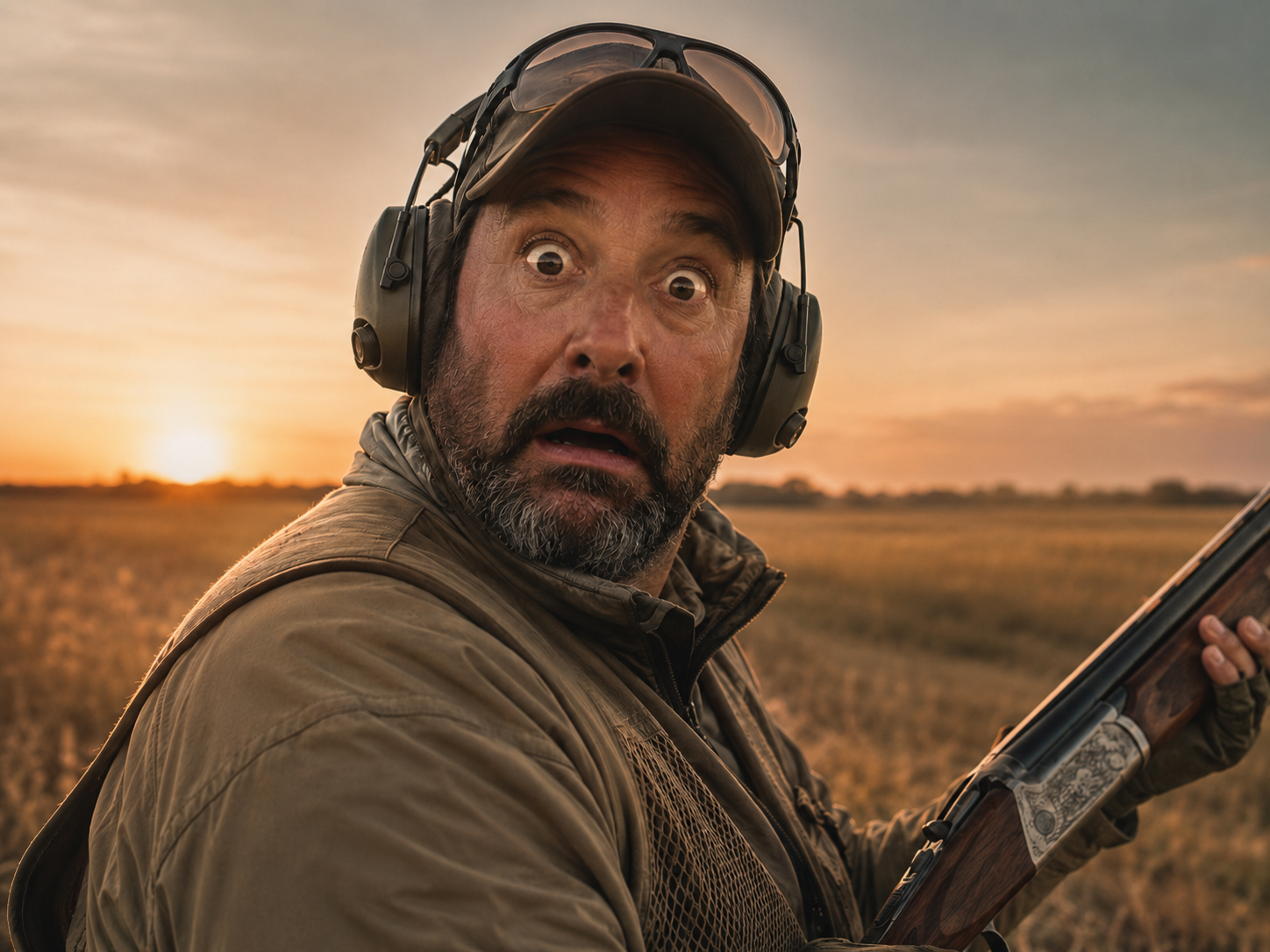
When outfitter scouts position your blind directly against the heavy timber of the Chaco scrub forest, the traditional horizontal crossing shot vanishes, forcing international wingshooters to master the aggressive, vertical "plunge" swing to hit doves dropping into the roost.
The Geometry of the Drop
In the open center of an agricultural feedlot, doves fly in long, horizontal lines. When you hunt the edge of the roost, the geometry changes completely. As the afternoon hunt progresses, millions of Eared Doves return from the fields to the safety of the heavy timber. To avoid waiting hawks and falcons, the doves fly extremely high, cresting the top of the tree canopy, and then execute a violent, vertical plunge directly downward into the safety of the branches. If your blind is positioned right at the edge of this tree line, the birds are literally falling out of the sky directly over your head.
Shooting ScenarioDove Flight TrajectoryRequired Swing MechanicThe Open FeedlotHorizontal, level crossing at 30 yards.Sustained lead; swinging side-to-side with the hips.The Tree Line EdgeSteep, vertical drop from the canopy.Pushing the barrel down; shooting under the bird.The Back-Line RoostFlying straight over the trees from behind.Aggressive spine bend; firing straight up at 12 o'clock.
Executing the Vertical Swing
Shooting a dropping bird is counter-intuitive for most upland hunters. You cannot use a sustained horizontal lead. When the bird clears the canopy and drops its wings, it is accelerating downward via gravity. If you aim directly at the bird's beak, you will miss over the top of it. You must pull the barrel of the shotgun down, completely obscuring the bird with the barrel of the gun, and pull the trigger. This is known as shooting "under" the bird. At premium operations like AWS Lodge, guides frequently place skilled shooters on the tree line specifically because the high-speed vertical drops provide the most technically challenging and visually spectacular shots of the day.
Tactical Field Note: Shooting the tree line requires absolute visual discipline. Do not look into the dense branches. Your eyes must stay locked on the empty, blue sky just above the top edge of the canopy. The moment the bird's silhouette breaks the edge of the tree line, you mount the gun and pull downward to intercept it.
Internal Connections
- See how horizontal shots work in Mastering the Crossing Shot: Forward Lead in the Dove Roost.
- Understand how sun glare affects this in Managing Sun Glare in the Afternoon Dove Roost.
- Read about the geography of the roost via The Anatomy of an Argentina Dove Roost.