Pump-Action Shotguns in Argentina: A High-Volume Mistake
Many North American hunters have a deep-seated nostalgia for the pump-action shotgun. It is the reliable workhorse of the domestic duck blind and the autumn pheasant field. However, deploying a pump-action on a premier Argentine wingshooting expedition is a profound tactical error. In an environment defined by extreme round counts and seamless logistics, the manual slide introduces unnecessary physical friction and completely breaks the fundamental rhythm of the field.
The Biomechanical Toll
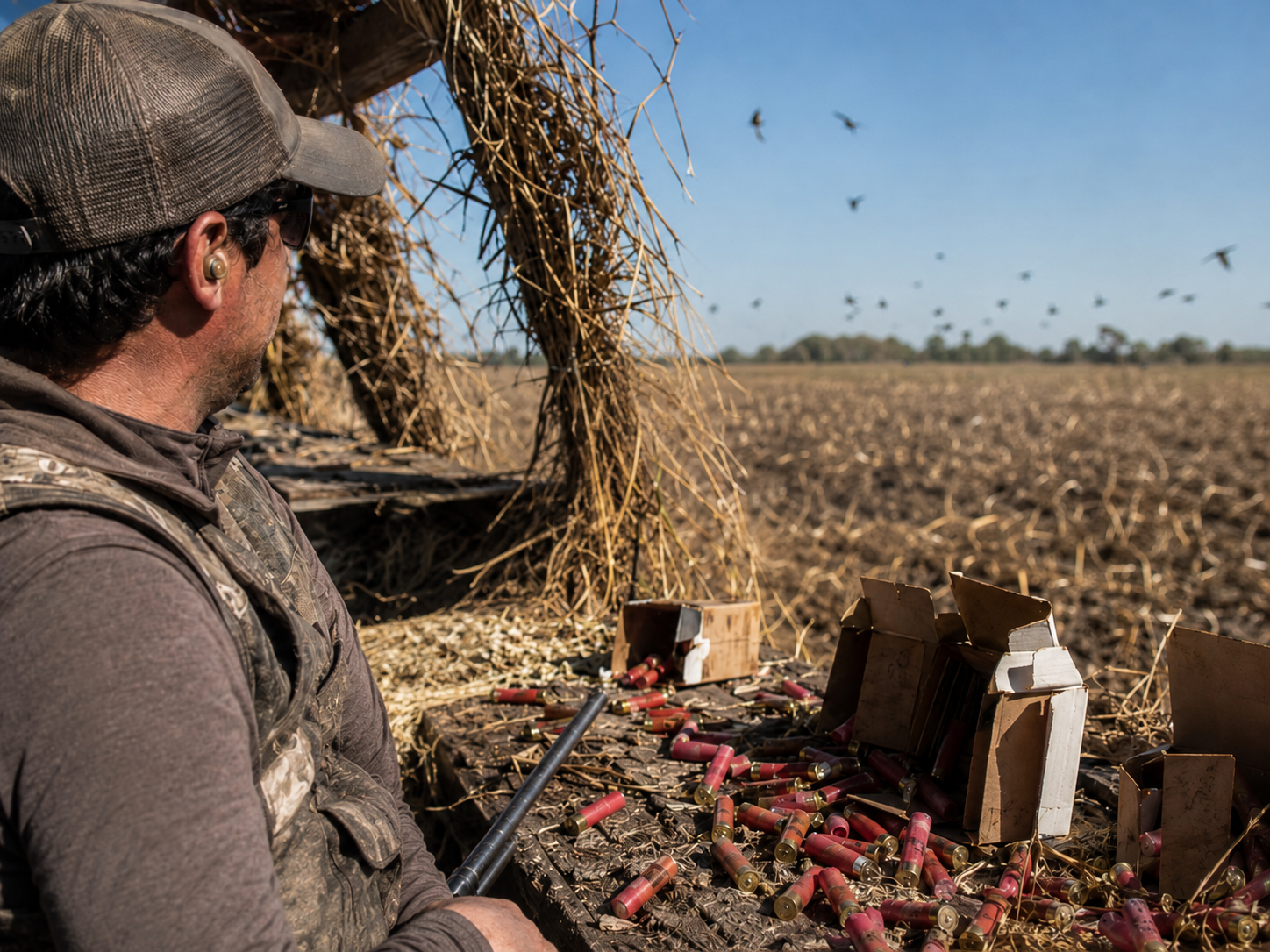
The sheer scale of an Argentine dove roost fundamentally changes the physics of shooting. When facing a high-volume flight, a hunter can easily cycle through 1,000 to 2,000 rounds in a single afternoon session.
- Support Arm Fatigue: Manually racking the slide for every single shot forces the shooter's forward arm to execute thousands of harsh, repetitive motions. This rapid onset of muscle fatigue destroys barrel control, pulls the muzzle off the target line, and ruins your swing long before the flight reaches its peak.
- The Short-Stroke Risk: As physical fatigue and adrenaline set in, the mechanics of the shooter begin to degrade. The most common result is "short-stroking"—failing to pull the slide completely to the rear. Under the pressure of a heavy flight, a short-stroke instantly induces a complex double-feed jam, completely shutting down your firing line while the birds pour over.
Breaking the Loader's Rhythm
The hallmark of the elite Argentine experience is the two-gun rotation. Your dedicated bird boy is not just handing you shells; they are executing a continuous, highly choreographed exchange of firearms designed to keep you shooting without ever pulling your eyes away from the sky.
- The Friction of the Pump: Professional loaders are highly trained specialists who operate entirely on muscle memory, built exclusively around the mechanics of break-action over/unders and modern semi-automatics. A pump-action disrupts this rhythm entirely. It forces awkward handoffs and introduces a manual variable into a system designed for automation.
- Mixed-Bag Logistics: During a dynamic mixed-bag program, you might transition from a precise morning duck deployment to a fast-paced upland walk for perdiz. The heavy, mechanical clunk of a pump-action slows down these rapid field transitions, adding unnecessary mechanical friction when speed and safety are paramount.
The Fleet Standard
To maintain peak efficiency, rely on the proven tools of the trade. Premium estancias maintain standardized fleets of high-end 20-gauge over/unders and semi-automatics for a reason: they mitigate recoil, cycle flawlessly under heavy carbon buildup, and integrate perfectly into the specialized two-gun handoff that local loaders have perfected over decades.
Tactical Field Note: Your bird boy's ability to seamlessly manage a two-gun rotation directly dictates the success and safety of your high-volume sessions. Their flawless execution keeps you in the action. When acknowledging their expert, rapid-fire loading at the end of your expedition, remember to adhere to the strict field currency protocol: reward their efficiency directly using only crisp, unblemished $50 and $100 US Dollar bills. This guarantees your gratuity bypasses the exchange rate penalty and retains its maximum purchasing power in the local economy.