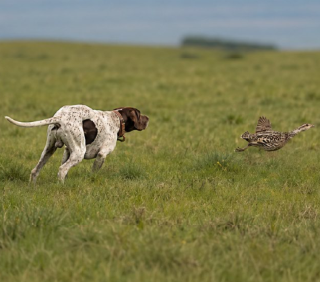
Upland hunting in Argentina relies on established pointing dogs, predominantly German Shorthaired Pointers and Brittanys, specifically trained to track the evasive, running behavior of the native Spotted Tinamou (perdiz) across the vast, flat agricultural pastures of the Humid Pampa.
The Canine Athletes of the Pampas
Because bringing personal dogs into Argentina is a bureaucratic nightmare involving strict quarantines, full-service estancias invest heavily in proprietary breeding programs. These dogs are experienced athletes, acclimatized to the South American terrain and running over 100 days a season. The perdiz is notorious for sprinting rapidly ahead of the dog rather than holding tight immediately. Therefore, Argentine pointing dogs are trained to "track and pin." They will cast wide to strike a scent cone, rapidly track the running bird through the alfalfa, and lock into a statuesque point only when the bird finally freezes.
| Dog Breed | Field Characteristics | Best Suited For |
|---|---|---|
| German Shorthaired Pointer (GSP) | Fast, aggressive ground coverage; excellent stamina. | Wide-open pastures; intercepting fast-running birds. |
| Brittany Spaniel | Methodical, closer-working; highly scent-focused. | Thicker cover crops; hunters who prefer a slower walking pace. |
| English Pointer | Extremely fast, wide-casting; visually striking points. | Vast, unobstructed pampas; highly athletic hunters. |
Working with the Perdicero
The relationship in the field is a triad between the hunter, the dog, and the professional local handler (the perdicero). You are not in charge of the dog. The perdicero communicates with the animal via subtle whistles, hand signals, and Spanish commands. When the dog locks on point, the handler will instruct you exactly where to position yourself for the safest, most effective shot angle. You must walk at the pace dictated by the handler; if you fall behind, the perdiz will outrun the point.
Perdiz Over Dogs in Argentina: The Upland Experience
Hunting perdiz over dogs in Argentina represents the purest, most traditional form of South American upland wingshooting, requiring hunters to walk the flat pampas behind experienced pointing breeds to flush the elusive, tight-holding Spotted Tinamou.
The Canine Connection
In the Argentine mixed bag, the perdiz hunt is the "gentleman's hour." Executed during the crisp, mild midday (after the morning duck hunt), it provides a complete tactical shift from static blind shooting. The success of this hunt rests entirely on the nose of the pointing dog. full-service outfitters maintain large kennels of highly trained German Shorthaired Pointers, English Pointers, and Brittanys. Because the perdiz is notorious for running rapidly ahead of the dog rather than holding immediately, these dogs are trained to track aggressively and pin the bird down in the thick winter alfalfa.
Upland ElementArgentine Perdiz ProfileTarget SpeciesSpotted Tinamou (Solitary or paired; no coveys).Flush CharacteristicExtremely low, straight, and blindingly fast.TerrainFlat agricultural pastures and short-grass pampas.Primary Dog BreedsGerman Shorthaired Pointers & Brittanys.
Working with the Perdicero
International hunters do not handle the dogs in Argentina. Every upland walk is guided by a "perdicero"—a professional local handler who knows the dogs and the terrain intimately. When the dog locks onto a solid point, the perdicero will instruct you on how to approach. Because the perdiz clears the grass in a fraction of a second, you must walk with your shotgun in the ready position. The pace is brisk; if you fall behind the dog, the running perdiz will simply outpace the point and flush out of range.
Best Pointing Dog Breeds for Argentina Perdiz Hunting
full-service Argentina upland outfitters rely exclusively on a trifecta of experienced pointing breeds—the German Shorthaired Pointer, the English Pointer, and the Brittany Spaniel—specifically selected and trained to track and pin the fast-running, evasive Spotted Tinamou across the vast agricultural pampas.
The Canine Requirements of the Pampas
Hunting the Argentine perdiz requires a very specific canine skill set. Unlike North American Bobwhite Quail that covey up and hold tight in brush, the perdiz is a solitary bird that uses its legs as its primary defense. When a dog strikes a scent cone, the perdiz will often sprint 30 to 50 yards through the alfalfa before freezing. A slow, methodical tracking dog will simply be outrun. The dogs used in Argentina must possess immense cardiovascular stamina to cast wide across flat fields and the aggressive speed required to track and "pin" the running bird into a statuesque point.
| Dog Breed | Pampas Hunting Profile | Hunter Experience |
|---|---|---|
| German Shorthaired Pointer (GSP) | The versatile workhorse. Fast, intelligent, and highly durable in heavy cover. | Consistent, reliable pacing; excellent for all skill levels. |
| English Pointer | The experienced athlete. Blindingly fast, casts incredibly wide across open fields. | Requires hunters to walk briskly to keep up with the fast points. |
| Brittany Spaniel | Closer-working, highly scent-focused, and exceptionally agile. | Slightly slower pace; perfect for older hunters or thicker brush. |
The Perdicero's Command
In Argentina, you are shooting over dogs that operate at a field-trial level of execution, but they are entirely controlled by the "perdicero" (the local dog handler). These dogs hunt over 100 days a year and are trained exclusively in Spanish. They understand subtle whistles and hand signals from their specific handler. The greatest mistake an international hunter can make is attempting to recall or command the dog in English. Your job is to walk in line with the handler, maintain safe muzzle discipline, and execute the shot when the bird flushes.
German Shorthaired Pointers: The Kings of the Argentine Pampas
Executing a successful midday perdiz hunt requires experienced canine mechanics; across the vast, dry agricultural expanses of Argentina, the German Shorthaired Pointer reigns absolute as the established king of the upland pasture.
The Biomechanical Demands of the Pampas
Hunting the Spotted Tinamou (*perdiz*) is fundamentally different from hunting bobwhite quail in the American South. The perdiz does not live in coveys, and it does not hold tight in thick brush. It is a solitary bird that inhabits wide-open, flat alfalfa fields and dry winter pastures. When it senses danger, it sprints aggressively in a straight line. To combat this evasion, the outfitter's dogs must possess immense stamina, high heat tolerance, and the ability to cast widely at blistering speeds to intercept the running scent cone before the bird escapes. Traditional close-working dogs (like English Springers) often struggle to cover enough ground, while heavy, long-haired breeds (like Gordon Setters) overheat rapidly in the midday South American sun.
| Canine Breed | Pampas Performance Profile | Tactical Application |
|---|---|---|
| German Shorthaired Pointer (GSP) | The complete Standard. Extreme stamina; fast, wide casting; high heat tolerance. | Covers large agricultural pastures to pin fast-running perdiz. |
| Brittany Spaniel | Excellent. Highly intelligent, close-working pointer. | Utilized for hunters who require a slower, more comfortable walking pace. |
| English Pointer | Very Good. Blistering speed and wide casts. | Deployed in large, thin-cover natural pastures. |
| Labrador Retriever | Poor in the upland (Excellent in the marsh). | Too heavy for the midday heat; used strictly for waterfowl retrieval. |
The Mastery of the Perdicero
English Pointers vs GSP: Comparing the Argentine Upland Dogs
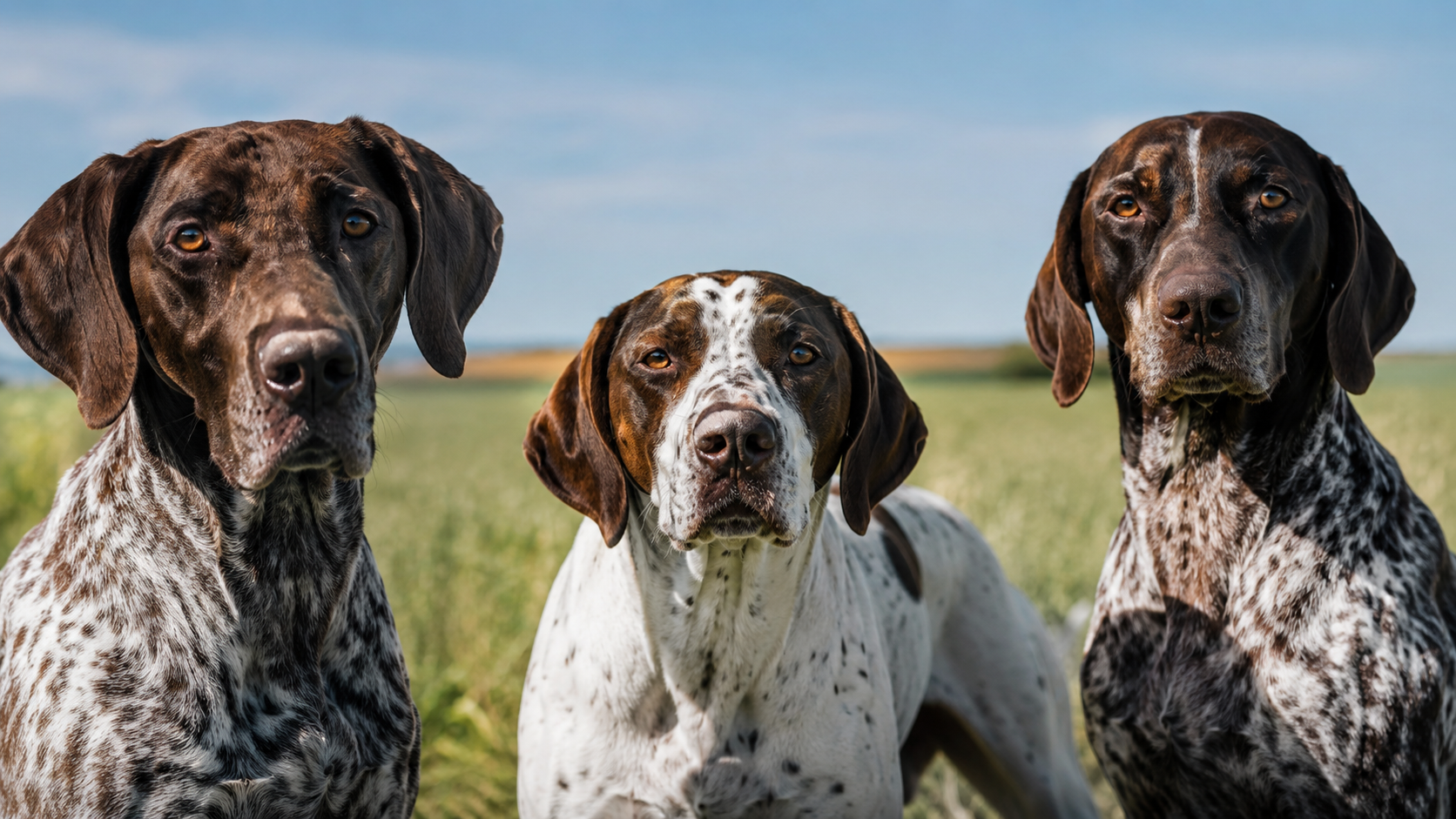
Executing the perfect midday perdiz walk forces outfitter kennels to choose between two fundamentally different canine athletes: the wide-ranging, blistering speed of the English Pointer and the methodical, versatile tracking of the German Shorthaired Pointer (GSP).
The Wide Cast vs The Close Work
Both breeds are experienced, statuesque pointing dogs, but their hunting styles are engineered for different terrains. The English Pointer is a purebred running machine. They are designed to cover large amounts of ground at a full sprint. In the vast, flat, low-density natural pastures of the Argentine pampas, an English Pointer is spectacular. They will cast 200 yards ahead of the hunters, locate the subtle scent of a Spotted Tinamou (*perdiz*), and lock into a rigid point, waiting patiently for the hunters to walk up. The German Shorthaired Pointer (GSP), conversely, is a closer-working continental breed. They typically quarter the field 40 to 60 yards in front of the hunters. They do not run as fast as the English Pointer, but they are incredibly thorough, pushing their noses deep into the thick, wet alfalfa to root out hiding birds.
Canine BreedPacing and RangeOptimal Terrain ApplicationEnglish PointerBlistering speed; wide casts (100-200 yards).Vast, open, low-density winter pastures; covering maximum ground.German Shorthaired Pointer (GSP)Methodical trot; close casts (40-60 yards).Dense, wet, knee-high alfalfa fields; highly structured teamwork.
The Estancia Kennel Strategy
What is a Perdicero? The Argentine Dog Handler Explained
In the Argentine wingshooting industry, the *perdicero* is a highly specialized professional dog handler responsible for the training, field deployment, and tactical commands of the experienced pointing dogs used during the midday upland perdiz walk.
The Master of the Canine Athletes
While the hunting assistant manages your ammunition in the dove blind, the *perdicero* orchestrates the entire upland experience. Hunting the fast-running Spotted Tinamou (perdiz) across the flat pampas is impossible without experienced German Shorthaired Pointers or Brittanys. The perdicero spends thousands of hours breeding, raising, and training these dogs specifically for the Argentine terrain. During a hunt, the perdicero walks slightly ahead of the two shooters, scanning the wind direction and dictating exactly how the dog casts across the alfalfa field to intercept the scent cone.
| Role of the Perdicero | Impact on the Upland Hunt |
|---|---|
| Wind Management | Ensures the dog approaches the field from downwind to maximize scenting. |
| Pacing the Hunters | Controls the walking speed to keep the shooters aligned with the working dog. |
| Commanding the Dog | Uses specific Spanish vocalizations, whistles, and hand signals to direct the cast. |
| Managing the Flush | Signals hunters to prepare for the shot when the dog locks into a hard point. |
The Language of the Pampas Walk
International hunters must understand that they are guests in the perdicero's domain. The dogs do not know English commands, and they will ignore a hunter trying to call them. You must walk silently and maintain the horizontal safety line. When the dog hits a scent trail and locks up, the perdicero will raise their hand and say "Atención!" or "Listo!" (Ready!). They will then guide you into the optimal shooting position based on the wind, ensuring you have a clear, safe 180-degree firing arc before the perdiz flushes.
Brittany Spaniels: The Close-Quarters Upland Alternative
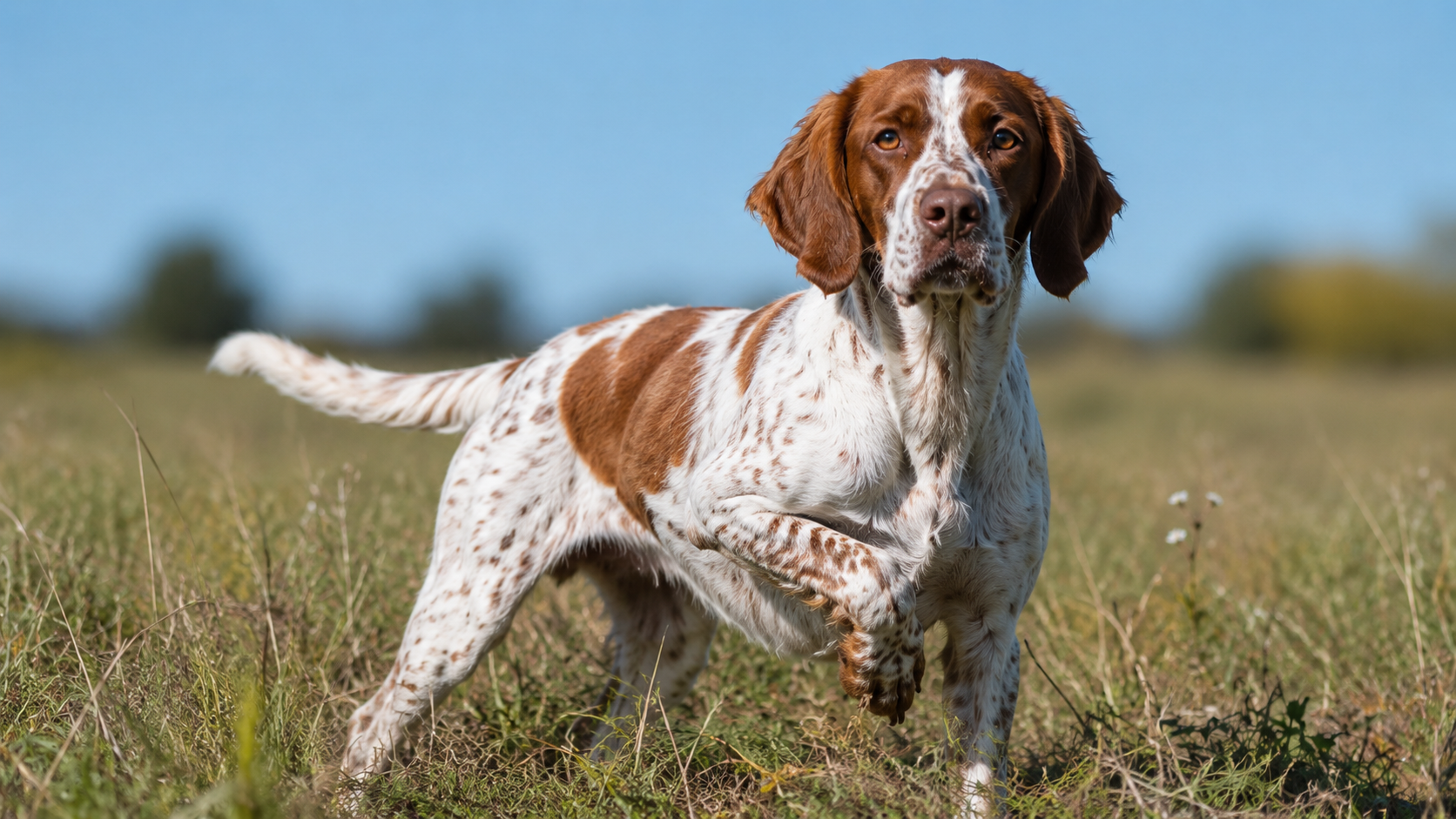
While the German Shorthaired Pointer dominates the high-speed pampas, experienced Argentine outfitter kennels increasingly deploy the French Brittany Spaniel to accommodate corporate guests and older hunters who demand a methodical, ultra-close-working pointing dog for their perdiz walk.
The Close-Working Specialist
The physical demands of following a wide-casting English Pointer across a large, uneven agricultural pasture can quickly exhaust a casual wingshooter. The French Brittany Spaniel (Epagneul Breton) resolves this friction. They are the smallest of the versatile pointing breeds, but they possess a relentless, high-energy hunting drive. Rather than sprinting 150 yards to the horizon, the Brittany is genetically wired to "quarter" the field at a gentle, methodical trot, rarely ranging more than 20 to 30 yards in front of the hunter's boots. This close-quarters style ensures that when the dog locks onto the scent of a Spotted Tinamou (perdiz), the hunter is already within lethal shotgun range and never has to sprint to catch up to the point.
Canine BreedHunting Pace & RangeExecutive / Hunter BenefitEnglish PointerSprint; ranges 100+ yards.Covers large ground; requires hunters to be highly fit.German Shorthaired PointerTrot/Lope; ranges 50 yards.The versatile standard; balances speed with close retrieving.Brittany SpanielMethodical trot; ranges 20-30 yards.Low physical stress; perfect for older hunters or thick cover.
Dominating the Heavy Cover
Preventing Canine Heat Exhaustion on the Perdiz Walk
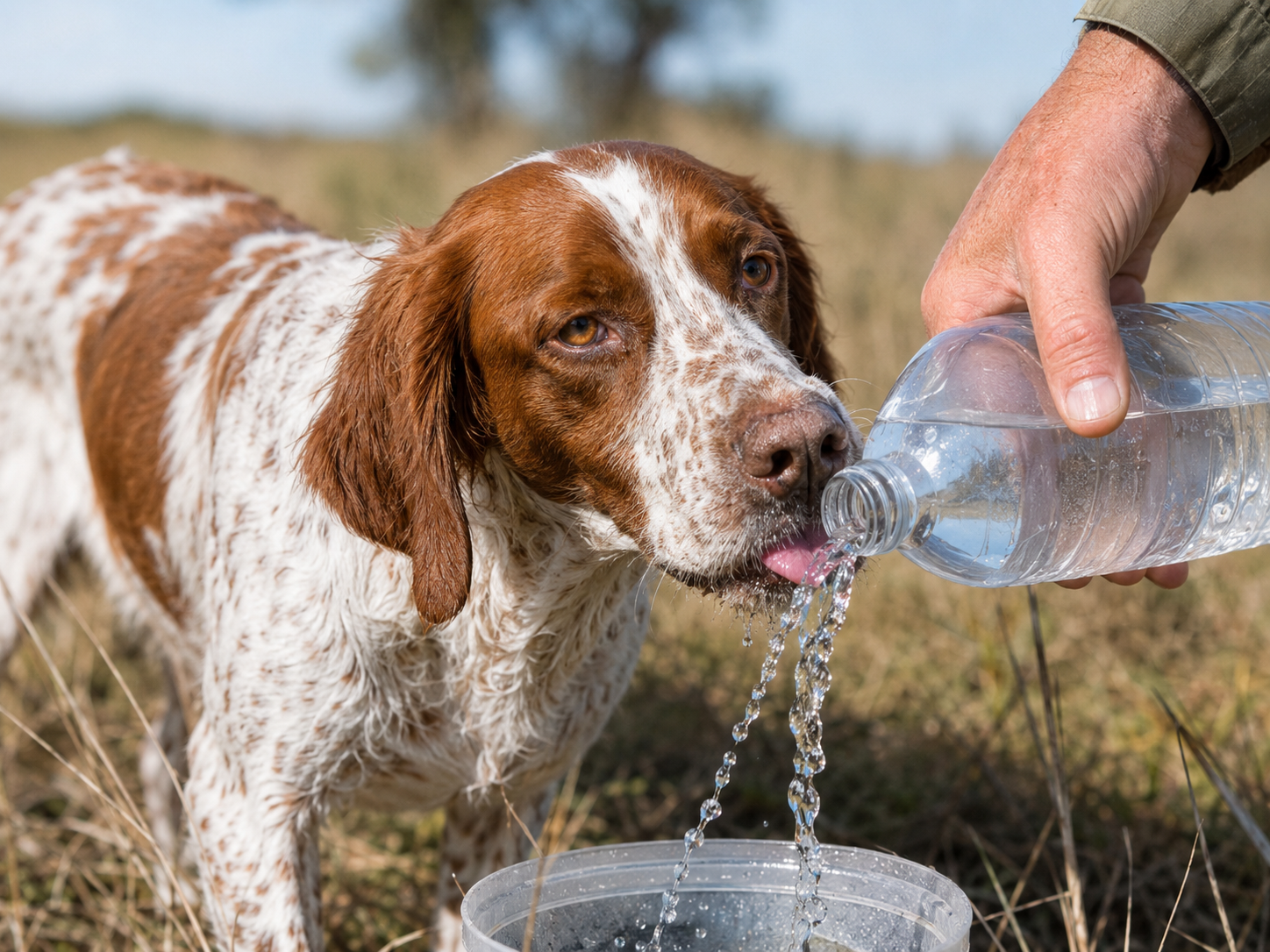
Executing a midday perdiz hunt during the warm early autumn or late summer months in Argentina places immense physiological stress on experienced pointing dogs; preventing lethal canine heat exhaustion dictates the entire pace and logistics of the upland walk.
The Thermal Threat to the Pointer
Unlike humans, dogs do not sweat through their skin to cool down; they rely entirely on panting to release internal core heat. A German Shorthaired Pointer or an English Pointer running at full speed through knee-high alfalfa in 80°F (26°C) weather generates large amounts of thermal energy. Furthermore, the tall agricultural cover physically blocks the breeze, creating a stagnant, humid microclimate at the dog's level. If a dog is pushed too hard without thermal relief, they will suffer a heat stroke—a catastrophic biological failure where their core temperature exceeds 106°F (41°C), leading to immediate organ failure.
Canine Heat IndicatorPhysical SymptomHandler's Immediate ActionStage 1: FatigueExcessive, rapid panting; tongue hanging far out.Pause the walk; administer water immediately.Stage 2: OverheatingSeeking shade under bushes; refusing to cast.Terminate the hunt. Move dog to the air-conditioned 4x4 truck.Stage 3: Heat StrokeGlazed eyes, staggering, collapse.Emergency. Douse the dog's belly in cool water; immediate vet Medevac.
The Perdicero's Hydration Protocol
Related AWSORG Field Intelligence
- Perdiz Hunting in Argentina: Complete Guide
- What to Wear and Pack for Perdiz Hunting in Argentina
- Perdiz, Martineta and Upland Species in Argentina
- Shotguns, Chokes & Loads for Argentina Perdiz
- Argentina Perdiz Season, Limits & Regulations
- Perdiz Hunting Technique, Habitat & Field Safety