Perdiz hunting in Argentina offers the traditional wingshooting purist the pinnacle of South American upland sport, demanding rigorous cardiovascular walking, well-organized pointing dog mechanics, and lightning-fast reflexes to intercept the explosive, low-altitude flush of the native Spotted Tinamou.
The Aristocrat of the Pampas
While the millions of eared doves draw the volume shooter, the *perdiz* (Spotted Tinamou) draws the upland elitist. The perdiz is not a quail or a pheasant; it is a solitary, partridge-sized game bird native to the short-grass pampas and winter alfalfa fields of Buenos Aires and Entre Ríos. Because they rely heavily on their legs for survival, they are notoriously difficult to track. They run fast through thick grass, forcing hunters and dogs to maintain an aggressive walking pace. When finally pinned, the flush is singular, violent, and incredibly low to the ground, skimming just inches above the horizon line in a blazing straight trajectory.
| Perdiz Hunting Element | Tactical Reality in Argentina |
|---|---|
| The Walk | Fast-paced, continuous walking for 2 to 4 miles across flat agricultural terrain. |
| The Dogs | experienced, wide-casting German Shorthaired Pointers or Brittanys directed by a *perdicero*. |
| The Flush | Solitary birds; low, horizontal, straight-line escapes. |
| The Shotgun | Lightweight 20-gauge or 28-gauge double-barrel or semi-automatic. |
The Midday Transition
In a standard Argentine mixed-bag itinerary, perdiz hunting serves as the tactical bridge between the morning duck marsh and the afternoon dove roost. It is executed strictly during the midday hours (11:00 AM to 2:00 PM). This timing is biologically necessary; the midday sun melts the heavy morning frost, unlocking the scent cones required for the pointing dogs to track the running birds. Furthermore, it provides the hunter with an active, leg-stretching cardiovascular warmup, allowing them to shed their heavy waterfowl waders, strap on lightweight leather boots, and walk the pampas under the bright, comfortable winter sun.
Perdiz Hunting Argentina: Cost and Mixed Bag Packages
Perdiz hunting in Argentina is almost exclusively bundled into full-service winter mixed-bag packages costing between $850 and $1,200 per day, as the large overhead required to maintain experienced kennels of pointing dogs year-round makes dedicated perdiz-only itineraries financially unviable for most high-end estancias.
The Economics of the Upland Dog
Hunters often ask why they cannot book a cheap, standalone perdiz walk. The answer lies in canine logistics. High-volume dove operations have very low overhead—just a field and a truck. A established perdiz operation requires maintaining kennels of 20 to 40 highly trained German Shorthaired Pointers and Brittanys. These dogs require year-round veterinary care, full-service food, and full-time professional handlers (perdiceros). To absorb this operational cost, lodges package the midday perdiz hunt alongside morning duck flights and afternoon dove shoots, delivering a comprehensive upscale experience.
| Hunting Activity | Typical Daily Lodge Rate | Included Logistics |
|---|---|---|
| Dove-Only Shoot | $650 - $900 | Scouts, hunting assistants, field transport. |
| Winter Mixed Bag (Ducks/Perdiz/Doves) | $850 - $1,200 | Mud boats, duck decoys, experienced pointing dogs, multiple guides. |
Budgeting for the Upland Walk
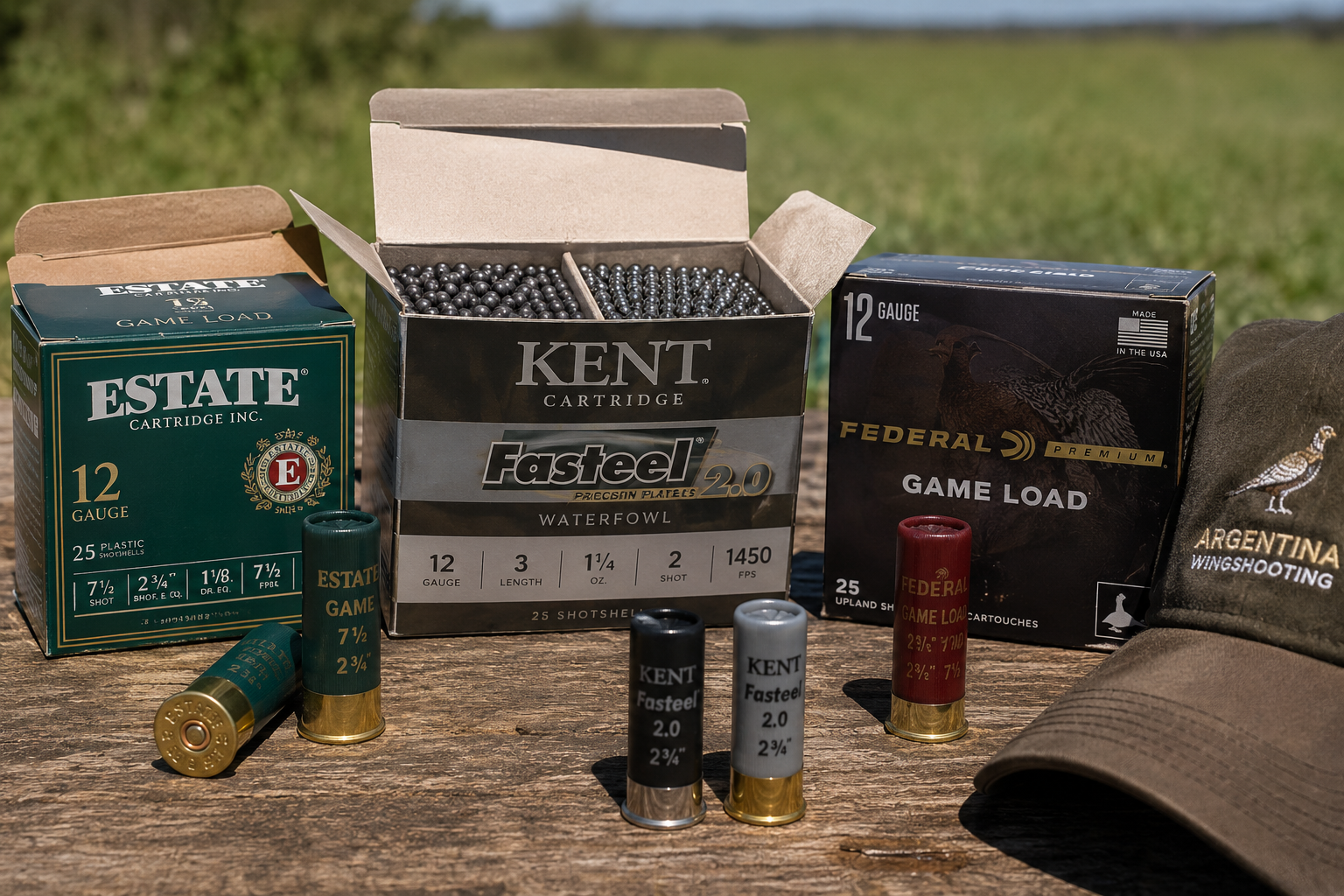
When calculating your total checkout invoice for a mixed bag, the perdiz segment is actually the cheapest variable cost. While you might fire 100 expensive steel shells in the duck blind and 1,000 lead shells in the dove roost, a two-hour perdiz walk is an exercise in precision. You will likely only fire 10 to 20 rounds of standard lead #7 shot. Your primary out-of-pocket extra for the perdiz hunt will simply be the cash gratuity handed to your dedicated dog handler at the end of the trip to thank him for his dog's hard work.
What U.S. Upland Hunters Should Know About Argentina Perdiz
U.S. upland hunters pursuing Argentine perdiz must adapt to a target that runs aggressively before holding tight, demanding brisk walking paces, absolute trust in the outfitter's pointing dogs, and the use of fast-swinging 20-gauge double-barrel shotguns to counter the bird's low, erratic escape trajectory.
Adapting to the Pampas Runner
For American hunters used to tight-holding woodcock or predictable pheasant flushes, the Argentine Spotted Tinamou (perdiz) requires a tactical adjustment. These birds are native to the vast, treeless pampas and use their legs as their primary defense mechanism. When a pointer strikes a scent cone, the perdiz will frequently sprint 30 to 50 yards ahead through the thick winter alfalfa before finally pinning itself down. Hunters must maintain a brisk, aggressive walking pace behind the dog handler to close the distance quickly; if you dawdle, the bird will outrun the dog's point entirely.
U.S. Upland HabitArgentine Perdiz RealityTactical AdjustmentExpecting a vertical, towering flush.Perdiz flush very low, skimming the grass.Keep the gun mount low and swing aggressively through the target.Waiting for the covey to scatter.Perdiz are solitary; only one bird will flush.Focus 100% of your visual acuity on the single rising target.Using a heavy 12-gauge field gun.Walking miles on flat, open terrain.Rent a lightweight 20-gauge or 28-gauge double-barrel to prevent fatigue.
Trusting the Perdicero
In Argentina, you do not handle the dogs. Your hunt is orchestrated by a professional local dog handler known as a 'perdicero.' These handlers run their German Shorthairs and Brittanys in these specific fields over 100 days a year. They read the subtle body language of their dogs perfectly. When the perdicero tells you to move left or speed up your pace, execute the command immediately. Do not attempt to command the dogs in English, as they are trained entirely in Spanish and hand signals.
Related AWSORG Field Intelligence
- What to Wear and Pack for Perdiz Hunting in Argentina
- Perdiz, Martineta and Upland Species in Argentina
- Pointing Dogs and Dog Handling for Argentina Perdiz
- Argentina Perdiz Season, Limits & Regulations
- Shotguns, Chokes & Loads for Argentina Perdiz