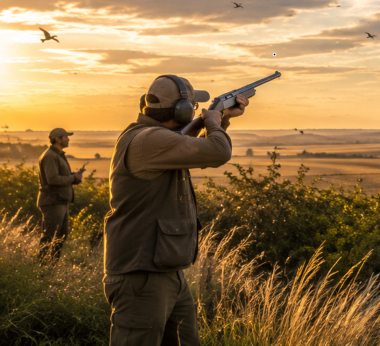
High-volume dove shooting in Argentina provides the ultimate laboratory for shotgunners. With millions of Eared Doves flying in massive, erratic swarms, hunters are presented with every conceivable angle, height, and speed. However, the most frequent—and most frequently missed—presentation in the pampas is the fast crossing shot. Mastering this 90-degree trajectory requires a fundamental understanding of forward lead and disciplined barrel movement.
The Anatomy of a Miss
When a hunter misses a crossing dove, 90 percent of the time, the shot string passes harmlessly behind the bird's tail feathers. This happens for two primary reasons: visually checking the shotgun bead and stopping the swing. When a shooter tries to aim a shotgun like a precision rifle, checking the barrel's relationship to the target, the gun inevitably slows down or stops the exact moment the trigger is pulled. By the time the pellets travel 30 yards through the air, the fast-flying dove is already three feet further down its flight path.
Two Approaches to Forward Lead
To consistently crush crossing doves, you must place the shot string in the empty air ahead of the bird, allowing the dove to fly into the expanding pattern. There are two primary techniques to achieve this in the roost:
- The Swing-Through Method: Excellent for hunters finding their rhythm. You start your gun mount behind the dove, accelerate the barrel through the bird's body, and pull the trigger just as the muzzle passes the beak. The aggressive momentum of your swing automatically provides the necessary forward lead.
- The Sustained Lead Method: The technique utilized by elite veteran wingshooters. As you mount the gun, you immediately place the muzzle ahead of the flying dove. You match the bird's speed with your swing, maintaining a deliberate visual gap between the barrel and the bird, and pull the trigger while keeping the gun moving. This requires more experience but results in a highly efficient, smooth shooting style that reduces fatigue.
The Importance of Follow-Through
Regardless of which method you employ, the absolute most critical component of a crossing shot is the follow-through. You must keep the shotgun barrel moving along the bird's flight path even after the shell fires. Think of it like a golf swing or a tennis backhand—stopping the motion at the exact point of impact ruins the physical mechanics and guarantees a miss behind the target.
Tactical Field Note: Do not try to mathematically calculate the exact lead distance in the blind (e.g., "I need to shoot exactly three feet in front of this bird"). Consciously calculating distances forces your eyes back to your barrel. Instead, lock your vision with a hard focus exclusively on the dove's beak, push the gun forward into the empty space, and trust your brain's subconscious hand-eye coordination to pull the trigger while the gun is in fluid motion.