Selecting the optimal choke tubes for an Argentina wingshooting expedition dictates your lethality across vastly different environments, requiring hunters to transition from open constrictions for decoying ducks and doves to tighter patterns for heavily armored pigeons and erratic parakeets.
The Open Constriction Advantage
The most common mistake international hunters make is over-choking their shotguns. In the United States, hunters frequently use "Modified" or "Full" chokes for late-season ducks or high-flying doves. In Argentina, the sheer volume of birds and the tactical deployment by guides ensures that 90% of your shots will occur inside of 30 yards. If you shoot a decoying Rosy-billed Pochard at 15 yards with a Full choke, you will pulverize the bird into an inedible state. The established workhorse of the Argentine pampas is the Improved Cylinder (IC) choke, which provides a wide, forgiving pattern perfectly suited for the close-range, high-volume action of the dove roost and the duck marsh.
| Target Species | Optimal Choke Tube | Ballistic Justification |
|---|---|---|
| Eared Dove | Improved Cylinder (IC) | Wide, forgiving pattern; perfect for high-volume pass shooting at 20-30 yards. |
| Waterfowl (Over Decoys) | Improved Cylinder (IC) or Light Modified (LM) | Allows non-toxic steel shot to spread efficiently on close-range, hovering birds. |
| Upland Perdiz | Improved Cylinder (IC) | Wide pattern prevents meat destruction on close, explosive flushes. |
| Picazuro Pigeon | Modified (M) | Requires a denser pattern of #5 lead to penetrate thick winter feathers at 30+ yards. |
| Monk Parakeet | Modified (M) or Improved Modified (IM) | Tight pattern needed to hit small, fast-diving, heavily muscled targets. |
Managing Rental Gun Chokes
When you rent a Beretta or Benelli 20-gauge from a full-service estancia, the armorer will almost universally hand you a gun equipped with a flush-mounted Improved Cylinder or Modified choke. You do not need to fly with your entire choke tube case. However, it is highly recommended to pack a specialized, high-torque choke wrench in your blind bag. Firing 2,000 rounds a day causes large barrel heat expansion, which can seize a flush-mounted choke tube into the threads. Checking the tightness of the rental choke during the midday break ensures it does not back out and damage the barrel.
How to Pack and Manage Shotgun Chokes for High-Volume Hunts
Managing shotgun chokes during an Argentina wingshooting expedition requires hunters to proactively pack extended choke tubes and a high-torque wrench, as the extreme barrel heat generated by 2,000-round days will cause flush-mounted chokes to seize violently in the threads.
The Danger of the Flush-Mounted Choke
When you rent a high-quality Beretta or Benelli 20-gauge from an estancia armory, it will almost certainly be equipped with a flush-mounted factory choke tube (typically an Improved Cylinder). While ballistically perfect, flush chokes pose a mechanical hazard in high-volume environments. When a hunter fires hundreds of rounds in an hour, the barrel steel expands. Gunpowder residue and carbon blow back into the threads. As the barrel cools during the midday siesta, the metal contracts around the carbon, effectively welding the flush choke into the barrel. Standard flat-metal choke keys cannot generate enough leverage to break this bond, rendering the gun useless if you need to change patterns.
| Choke Management Tool | Tactical Purpose in Argentina |
|---|---|
| Extended Choke Tubes | Allows the hunter to check tightness by hand; dissipates heat faster. |
| High-Torque Wrench | Provides the leverage needed to break loose a seized, carbon-locked choke. |
| Choke Tube Lube / Grease | Prevents carbon from permanently locking the threads (applied by the lodge armorer). |
| Improved Cylinder (IC) | The standard daily workhorse for close-range doves and decoying ducks. |
| Modified (M) | The backup choke for windy days, parakeets, and high-altitude pigeons. |
Packing the Choke Kit
You do not need to fly with a heavy Pelican case full of 15 different chokes. The minimalist, highly efficient Argentine choke kit fits in a Ziploc bag inside your blind bag. If you know you are renting a Beretta A400, pack two extended aftermarket chokes (one IC, one Modified) matching the Optima HP thread pattern, along with a proper handle-driven choke wrench. Every two hours during the dove shoot, reach up and physically verify that your extended choke is hand-tight. If it begins to back out, the expanding gasses will destroy the barrel threads.
Shotgun Barrel Lengths for High-Volume Argentina Hunts
Selecting the optimal shotgun barrel length for an Argentina wingshooting expedition dictates your swing tracking and physical stamina, requiring a balance between the steady inertia of longer tubes and the quick reactivity of shorter barrels.
The Physics of the Swing Corridor
In the international wingshooting arena, barrel length is not about projectable velocity; modern smokeless gunpowder completely burns within the first 22 inches of a barrel. Instead, barrel length is a tool for mechanical leverage and weight distribution. A longer barrel (28 or 30 inches) increases the gun's sight plane and shifts the balance point forward toward your leading hand. This forward weight creates steady physical inertia, making it significantly easier to maintain a smooth, continuous follow-through on long-distance crossing targets without stopping the muzzle. Conversely, a shorter barrel (26 inches) reduces total weight and speeds up your lateral mount, but can feel erratic or flighty under high-volume pressure.
| Barrel Length | Mechanical Advantage | Optimal Argentine Application |
|---|---|---|
| 26 Inches | Ultra-light weight; blindingly fast reactionary mounting. | Midday Upland Perdiz walks; close-quarters brush forest edges. |
| 28 Inches | The absolute universal benchmark; balanced swing and speed. | High-Volume Dove feedlots; multi-gauge mixed-bag rotations. |
| 30 Inches | Sustained tracking inertia; elongated sight rib; smooth follow-through. | Decoying Picazuro Pigeons; open-marsh long-range Waterfowl. |
Blueprinting the Rental Fleet
Shotgun Magazine Capacity: Unplugged Guns
A shocking and exhilarating realization for U.S. hunters arriving in Argentina is the complete absence of federal magazine capacity restrictions, allowing international shooters to run their semi-automatic shotguns completely unplugged in the dove roost.
The Absence of the 3-Shell Rule
| Regulatory Metric | United States (Migratory) | Argentina (Doves & Pigeons) |
|---|---|---|
| Magazine Plug Mandate | Required by Federal Law. | Not Required. Completely legal to remove. |
| Maximum Shell Capacity | 3 Shells Total. | 5 Shells (Standard Tube) or higher with extensions. |
| Bag Limits | Strictly enforced (e.g., 15 doves). | Infinite. Zero daily limits on doves or pigeons. |
The Tactical Advantage of the 5-Shot
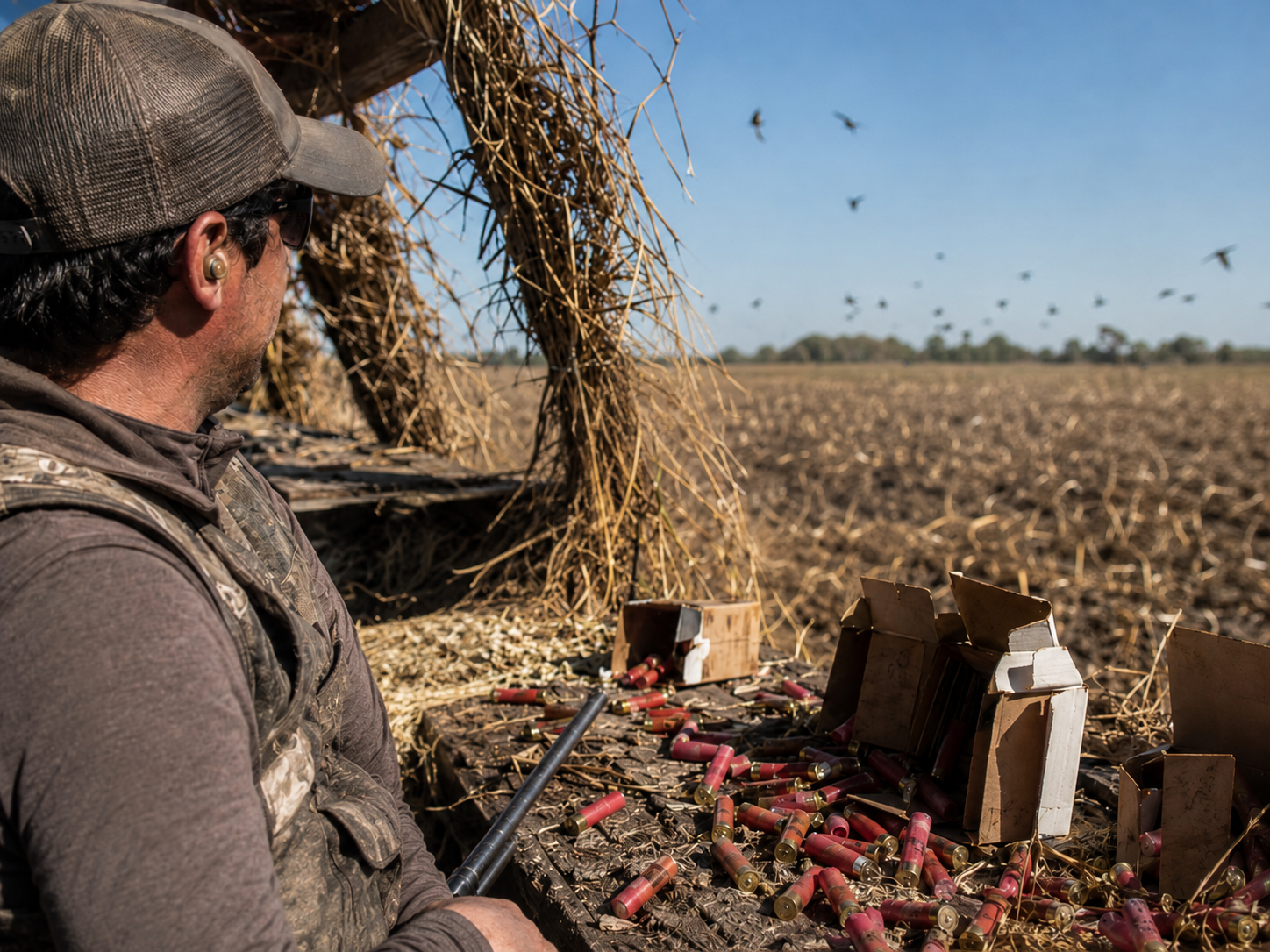
Having five rounds at your disposal completely alters the rhythm of the blind. When a large swarm of forty doves drops over the tree line, a skilled shooter can easily drop three, four, or even five birds from a single flock before the gun runs dry. This extended capacity is precisely why the role of the secretario (hunting assistant) is so vital. As you empty the 5-shot magazine, the hunting assistant is already handing you your secondary, fully loaded 5-shot Beretta. This synchronized exchange allows experienced shooters to put an astonishing amount of lead into the air within a five-second window.
Over-and-Under vs Semi-Auto Shotguns
Choosing between a classic Over-and-Under (O/U) double-barrel and a modern Semi-Automatic shotgun for an Argentina wingshooting trip forces hunters to balance the traditional elegance of the upland walk against the brutal, physical reality of high-volume kinetic recoil.
The Physics of High-Volume Recoil
In the United States, full-service Over-and-Under shotguns (like Perazzis, Beretta Silver Pigeons, or Brownings) are the established kings of the sporting clays course and the upland field. However, in an Argentine dove roost, an O/U is a physical liability. Over-and-under shotguns utilize a fixed-breech system, meaning 100% of the kinetic energy generated by the fired shell is transferred directly backward into the shooter's shoulder. If you fire a double-barrel 1,500 times in a single afternoon, you will suffer severe deep-tissue bruising. Conversely, modern gas-operated semi-automatics (like the Beretta A400) bleed off expanding gasses to cycle the bolt, mechanically dampening the recoil by up to 40%, allowing shooters to endure large volume without injury.
| Shotgun Action | Felt Recoil | Optimal Argentine Application |
|---|---|---|
| Gas-Operated Semi-Auto | Very Low (Gas absorption). | High-Volume Doves; Decoying Pigeons. |
| Inertia Semi-Auto | Moderate (Requires rigid mount). | Duck Hunting (Impervious to marsh mud). |
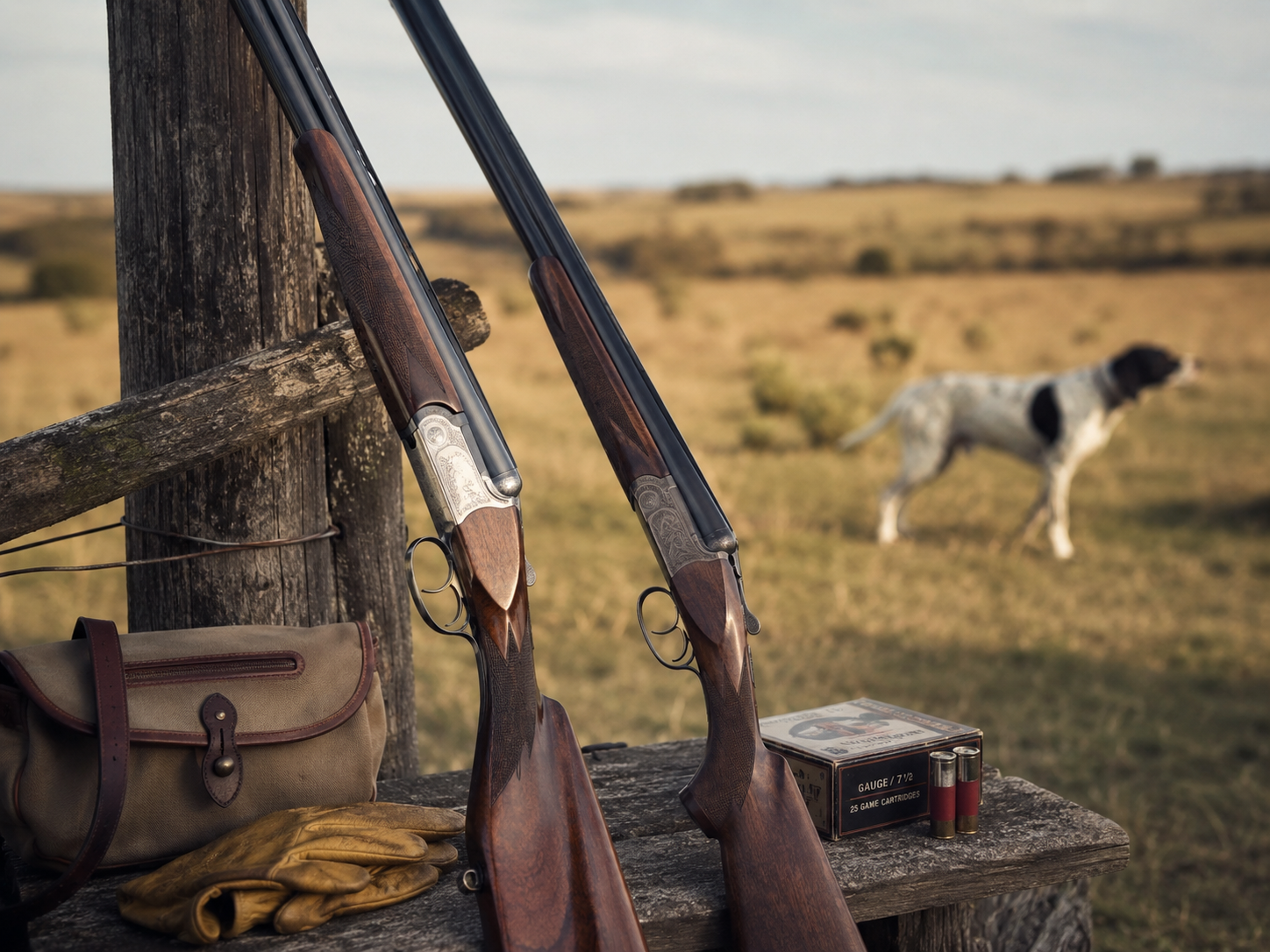
| Over-and-Under (O/U) | High (100% energy transfer). | Midday Perdiz walks (Low volume, high tradition). |
| Side-by-Side (SxS) | High (100% energy transfer). | Classic Waterfowling (Requires Bismuth shells). |
The Strategic Mixed-Bag Deployment
The solution for the traditionalist executing a mixed-bag itinerary is to deploy both platforms. full-service Argentine estancias cater to this exact demand. You do not need to choose just one. During the midday upland segment—where you walk two miles and shoot perhaps 20 times at flushing Spotted Tinamou (perdiz)—request a lightweight 20-gauge or 28-gauge Over-and-Under from the armory. It carries beautifully over the arm and offers fast, elegant swing dynamics. When you return to the lodge for lunch and prepare for the afternoon dove feedlot, hand the O/U to the armorer and switch to a gas-operated semi-automatic to survive the endurance shoot.
Pump-Action Shotguns in Argentina: A High-Volume Mistake
Pump-Action Shotguns in Argentina: A High-Volume Mistake
Many North American hunters have a deep-seated nostalgia for the pump-action shotgun. It is the reliable workhorse of the domestic duck blind and the autumn pheasant field. However, deploying a pump-action on a premier Argentine wingshooting expedition is a profound tactical error. In an environment defined by extreme round counts and seamless logistics, the manual slide introduces unnecessary physical friction and completely breaks the fundamental rhythm of the field.
The Biomechanical Toll
The sheer scale of an Argentine dove roost fundamentally changes the physics of shooting. When facing a high-volume flight, a hunter can easily cycle through 1,000 to 2,000 rounds in a single afternoon session.
- Support Arm Fatigue: Manually racking the slide for every single shot forces the shooter's forward arm to execute thousands of harsh, repetitive motions. This rapid onset of muscle fatigue destroys barrel control, pulls the muzzle off the target line, and ruins your swing long before the flight reaches its peak.
- The Short-Stroke Risk: As physical fatigue and adrenaline set in, the mechanics of the shooter begin to degrade. The most common result is "short-stroking"—failing to pull the slide completely to the rear. Under the pressure of a heavy flight, a short-stroke instantly induces a complex double-feed jam, completely shutting down your firing line while the birds pour over.
Breaking the Loader's Rhythm
The hallmark of the experienced Argentine experience is the two-gun rotation. Your dedicated hunting assistant is not just handing you shells; they are executing a continuous, highly choreographed exchange of firearms designed to keep you shooting without ever pulling your eyes away from the sky.
- The Friction of the Pump: Professional loaders are highly trained specialists who operate entirely on muscle memory, built exclusively around the mechanics of break-action over/unders and modern semi-automatics. A pump-action disrupts this rhythm entirely. It forces awkward handoffs and introduces a manual variable into a system designed for automation.
- Mixed-Bag Logistics: During a dynamic mixed-bag program, you might transition from a precise morning duck deployment to a fast-paced upland walk for perdiz. The heavy, mechanical clunk of a pump-action slows down these rapid field transitions, adding unnecessary mechanical friction when speed and safety are paramount.
The Fleet Standard
To maintain peak efficiency, rely on the proven tools of the trade. full-service estancias maintain standardized fleets of high-end 20-gauge over/unders and semi-automatics for a reason: they mitigate recoil, cycle reliably under heavy carbon buildup, and integrate perfectly into the specialized two-gun handoff that local loaders have perfected over decades.
Estimating Shotgun Range on the Flat Argentine Pampas
The vast, featureless horizon of the Argentine pampas creates a severe optical illusion that compresses depth perception, requiring international hunters to implement hard visual yardage markers to prevent unethical, out-of-range shots on doves and waterfowl.
The Optical Illusion of the Plains
In North America, hunters use natural vertical structures—tall oak trees, ridge lines, or varied topography—to subconsciously gauge distance. The Humid Pampa of Buenos Aires and the agricultural basins of Córdoba are shockingly flat. When you stand in a large harvested soybean field, there is no background to provide scale. A flock of doves flying against a pure blue sky at 50 yards looks identical to a flock flying at 30 yards. This visual compression causes hunters to mount their guns and fire at birds well beyond the lethal limit of their 20-gauge, resulting in wasted ammunition and crippled game.
| Hunting Environment | The Range Estimation Challenge | Tactical Solution |
|---|---|---|
| Waterfowl Marsh | Water reflects light, making ducks appear 10-15 yards closer than they are. | Use the furthest decoy block as an absolute 35-yard "Do Not Shoot" boundary. |
| Pigeon Peanut Field | Large size of the Picazuro pigeon makes them look deceptively close. | Use the spinning rotary machine as the 25-yard visual center point. |
| Dove Roost Edge | Birds exiting the timber appear slow until they cross into the open sky. | Pace off 30 yards from the blind and mark a specific bush or fence post. |
Establishing the Kill Box
Before you load your shotgun on the first morning, you must calibrate your eyes. In the duck or pigeon blind, this is relatively easy. The guide will set the outermost decoys in the spread at roughly 35 yards. Treat that outer decoy line as an electric fence; if a bird has not crossed inside that line, you do not shoot. In a dove roost where there are no decoys, you must create your own markers. Walk exactly 30 paces out from your blind toward the primary flight line. Find a distinctive clump of grass, a broken sunflower stalk, or a fence post. Memorize its location. This is the outer edge of your "Kill Box."
Post-Hunt Gun Cleaning: If You Brought Your Own Shotgun
For the wingshooting purist who endures ANMAC customs to import a high-end, custom-fitted shotgun, relying on the estancia armorer for maintenance is a large risk; you must pack your own specialized solvents and assume full responsibility for the nightly deep-cleaning.
The Industrial Reality of the Lodge Armory
full-service hunting lodges maintain large fleets of Beretta and Benelli rental guns. To keep 50 shotguns cycling through 2,000 rounds a day, the lodge armorers operate an industrial, high-speed cleaning process. They frequently utilize heavy chemical solvents, diesel derivatives, or harsh aerosol degreasers to strip carbon off gas pistons rapidly. If you hand the armorer your $15,000 custom Perazzi or engraved Holland & Holland, those harsh industrial solvents can permanently strip the protective oils from the Turkish walnut stock, dull the bluing, and damage delicate engraving inlays. experienced outfitters will often politely refuse to clean private imported guns specifically to avoid liability for accidental damage.
| Cleaning Component | Lodge Armorer Standard | Purist / Custom Gun Standard |
|---|---|---|
| Solvents | Harsh industrial degreasers / aerosols. | full-service, wood-safe carbon removers (e.g., Hoppe's experienced). |
| Lubrication | Light synthetic dry-lube (focus on speed). | High-quality gun grease on hinge pins; full-service oil on ejectors. |
| Barrel Cleaning | Steel wire brushes chucked into power drills. | Soft brass brushes; pull-through bore snakes. |
| Exterior Finish | Wiped down with industrial rags. | Microfiber cloths; silicone-treated protective wipes. |
The Personal Armorer Kit
If you bring your own firearm, you are the armorer. Because TSA and airline regulations prohibit flying with flammable aerosols or harsh liquid chemical solvents in checked baggage, you must build an airline-compliant travel kit. Pack a high-quality pull-through bore snake for your specific gauge, a set of soft microfiber cloths, an old toothbrush for scrubbing the breech face, and non-flammable, TSA-approved single-use lubricant wipes or tiny, sealed dropper bottles of full-service gun oil (under 3.4 oz). Every evening after the hunt, take 15 minutes before dinner to wipe down the exterior, punch the barrels, and re-grease the hinge pins.
Handling Shotgun Jams and Misfires in the Argentine Blind
When firing 2,000 rounds a day in the abrasive, dusty agricultural environments of Argentina, mechanical shotgun jams and ammunition misfires are a mathematical certainty; executing the correct safety protocols prevents catastrophic blind accidents.
The Mechanics of the Failure
Even the most meticulously maintained Beretta A400 will eventually experience a failure to feed (jam) or a failure to fire (misfire) when pushed to the extreme thermal limits of a high-volume dove roost. These failures are typically caused by three factors: severe carbon buildup on the gas piston, agricultural dust mixing with gun lubricant to form a sludge, or a localized "dud" shell with a faulty primer. The immediate psychological instinct for a hunter when a gun goes "click" instead of "bang" is to turn the shotgun sideways, look at the action, or worse, peer down the barrel. In a blind shared with a hunting assistant, this is a lethal safety violation.
| Failure Type | Immediate Visual Indicator | Required Safety Protocol |
|---|---|---|
| The Misfire (Dud) | You pull the trigger, hear a 'click', but nothing fires. | Keep the gun pointed downrange for 10 seconds (hang-fire risk). |
| Failure to Extract (Stovepipe) | The empty hull is caught halfway out of the ejection port. | Keep muzzle pointed at the sky; hand the gun to the hunting assistant. |
| Failure to Feed | The bolt locks back, but a live shell remains on the carrier. | Do not force the bolt closed; allow the hunting assistant to clear the action. |
The Handoff Protocol
Your hunting assistant is not just a loader; they are a trained armorer's assistant. If your shotgun experiences any mechanical anomaly, you must immediately freeze your swing. Keep the muzzle pointed directly up into the sky or firmly locked inside the 10-to-2 o'clock firing arc. Announce the jam to your hunting assistant (a simple "Jammed" or "Trabada" will suffice). Without lowering the muzzle below the horizon, hand the entire firearm backward to the loader. They are trained to safely drop the trigger assembly, extract swollen hulls, and clear the action. While they fix the primary gun, they will hand you your backup shotgun so you can continue shooting.
Bringing Choke Tubes to Argentina: Rental Gun Compatibility
For international wingshooters who prefer the logistical ease of renting lodge shotguns but refuse to sacrifice precise pattern control, packing personal, extended aftermarket choke tubes is a brilliant tactical compromise—provided you match the correct thread pitch.
The Rental Armory Standard
| Shotgun Model (20-Gauge) | Standard Factory Thread Pattern | Compatibility Warning |
|---|---|---|
| Beretta A400 (Newer Models) | Optima HP (Optima-Choke HP). | Do not force older Mobil chokes into HP barrels; it will destroy the threads. |
| Beretta Urika AL391 / 390 | Beretta Mobil Choke. | The classic, most ubiquitous thread pattern in older Argentine rental fleets. |
| Benelli Montefeltro / M2 | Benelli Crio Plus or standard Mobil. | Verify the exact model generation with the outfitter prior to travel. |
The Pre-Trip Reconnaissance
Shotgun Forcing Cones and Recoil in High-Volume Hunts
For wingshooters looking to optimize firearm mechanics for endurance, understanding the internal dimensions of shotgun forcing cones represents a hidden, highly technical strategy for reducing felt recoil and increasing downrange pattern density.
The Ballistics of the Internal Taper
The forcing cone is the short, tapered transition zone inside a shotgun barrel that sits immediately forward of the chamber and leads directly into the main bore. In standard factory shotguns, this taper is incredibly abrupt, measuring roughly a quarter of an inch. When a 20-gauge shell fires, the lead pellet column slams violently into this short taper, causing severe pellet deformation and a sudden, sharp spike in backward kinetic energy. By modifying the barrel to lengthen the forcing cone to three inches, the pellet column slides smoothly into the bore, drastically dampening the initial shock and flattening the felt recoil curve before it punches your shoulder.
| Forcing Cone Configuration | Internal Taper Dimension | Biomechanical Impact on the Shooter |
|---|---|---|
| Standard Factory Cone | Short (~0.25 inches); abrupt transition. | Creates a sharp, painful recoil spike; deforms trailing pellets. |
| Lengthened Aftermarket Cone | Elongated (2.5 to 3.0 inches); ultra-smooth. | Mechanically reduces felt recoil by up to 15%; prevents muzzle rise. |
Protecting the Shoulder over 4 Days
The 16-Gauge Shotgun: The Forgotten Classic of the Pampas
While the 20-gauge semi-automatic monopolizes the high-volume dove roost, the classic 16-gauge shotgun remains the complete, elegant pursuit for the traditional wingshooter executing a mixed-bag itinerary in the Argentine pampas.
The 'Sweet Sixteen' Ballistic Balance
Historically known as the "Gentleman's Gauge," the 16-gauge shotgun was designed to carry like a 20-gauge but hit like a 12-gauge. For decades, it was the absolute standard for upland hunters in the United States and Europe. In the context of an Argentine mixed bag, its ballistics are well-organized. The 16-gauge throws a perfectly "square" shot column (often 1 ounce of lead), creating a beautifully uniform pattern. This makes it devastatingly effective on the large, tough-bodied Picazuro pigeon, and incredibly precise for the fast-flushing Spotted Tinamou (*perdiz*), without inflicting the heavy, punishing recoil of a standard 12-gauge field gun.
| Shotgun Gauge | Physical Weight | Kinetic Payload (Standard) | Ideal Argentine Application |
|---|---|---|---|
| 12-Gauge | Heavy (~7.5 lbs). | 1 1/8 oz. | Deep-water waterfowl; heavy high-wind pigeons. |
| 16-Gauge | Light (~6.5 lbs). | 1 oz. | The perfect upland walk; decoying pigeons. |
| 20-Gauge | Very Light (~6.0 lbs). | 7/8 oz. | High-volume dove endurance shooting. |
The Logistical Friction of the 16-Gauge
Related AWSORG Field Intelligence
- How to Plan an Argentina Hunting Trip
- Argentina Entry Rules, Visa, Customs & Travel Documents for Hunters
- Food, Wine & Lodge Culture on Argentina Wingshooting Trips
- Health & Medical Planning for an Argentina Hunting Trip
- Private Aviation, Charter & Helicopter Logistics for Argentina Lodges
- Travel & Medical Evacuation Insurance for Argentina Hunting
Field Visuals