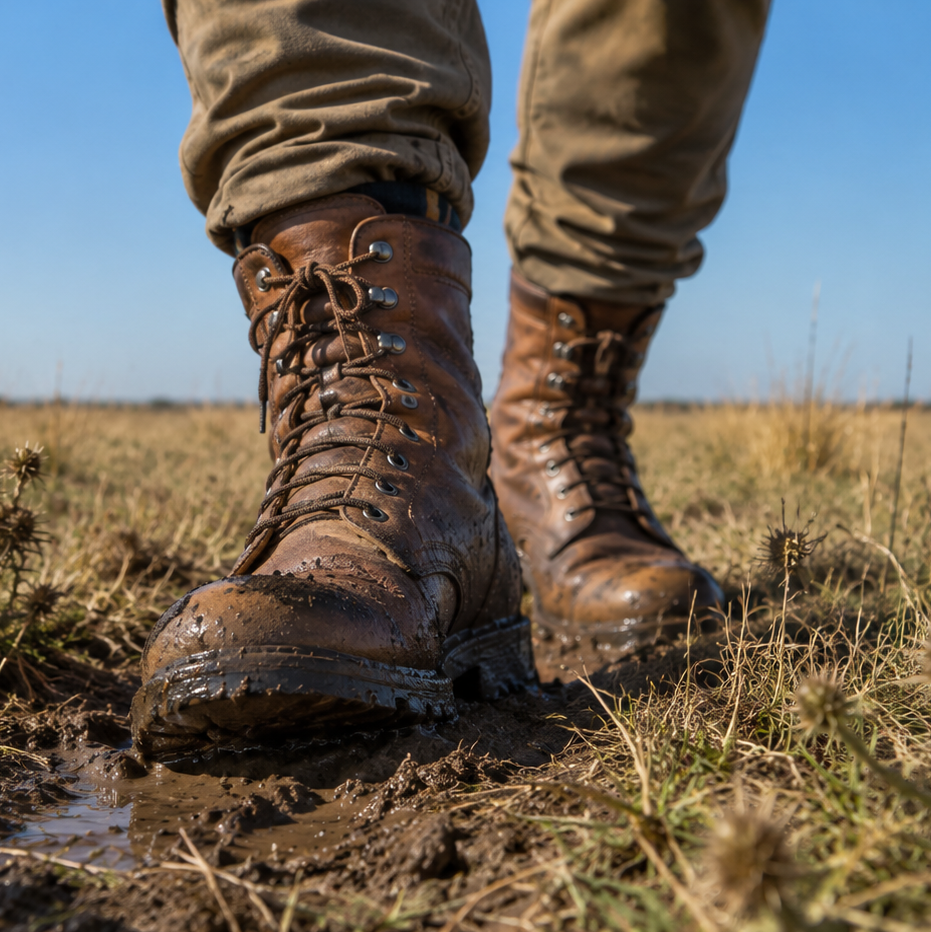
Perdiz hunting in the Argentine Pampas is a world-class upland experience, but it is also one of the most abrasive environments for high-end leather boots. Between the heavy, acidic morning dew, deep mud in the flood-prone pastures, and the relentless, sharp thistles that carpet the field, your footwear is under constant assault. If you don't manage your leather properly, your boots will crack, stiffen, and fail long before your trip concludes.
The Pre-Trip Treatment
Preparation begins before you ever touch down in Buenos Aires. New or well-used leather boots need to be saturated with a high-quality beeswax or leather conditioner before you leave. The goal is to make the leather water-resistant and supple. If the leather is dry when you arrive, it will immediately soak up moisture like a sponge, leading to faster deterioration once you start walking through the damp pampas grass.
Daily Field Maintenance
After every hunt, your boots will likely be caked in a mix of mud, organic debris, and burrs. This must be managed immediately.
- Clean: Use a soft-bristled brush to knock off the dried mud and dirt. If left on, mud pulls the natural oils out of the leather as it dries, which eventually causes cracking.
- Dry: The biggest mistake hunters make is attempting to force-dry their boots by placing them directly in front of a fireplace, a heater, or a radiator. Direct, high-intensity heat is the fastest way to ruin a pair of expensive boots. It strips the natural oils instantly, causes the leather to shrink and become brittle, and can even melt the glue holding the soles to the boot.
- Forced Air: The proper way to dry boots is to use a forced-air boot dryer or simply stuff them with newspaper and leave them in a well-ventilated room at ambient temperature.
Thistle Protection
The thistles in Argentina are deceptively tough. They don't just cling to your socks; they scrape the protective finish off the leather. Regular conditioning throughout your trip—not just before you leave—keeps the surface of the leather slick and hydrated. A supple, conditioned boot is far more resistant to being scored or torn by brush and thorns than a dry, neglected one.
Tactical Field Note: If your boots get soaked, prioritize the forced-air drying method above all else. If you are staying at an estancia without electric boot dryers, check with the lodge staff; most premium hunting lodges have designated mudrooms or boot-drying racks specifically designed to handle this. Never, under any circumstances, leave your leather boots next to the estancia's fireplace. You are better off wearing slightly damp boots the next morning than wearing boots that have had their structural integrity destroyed by heat.